
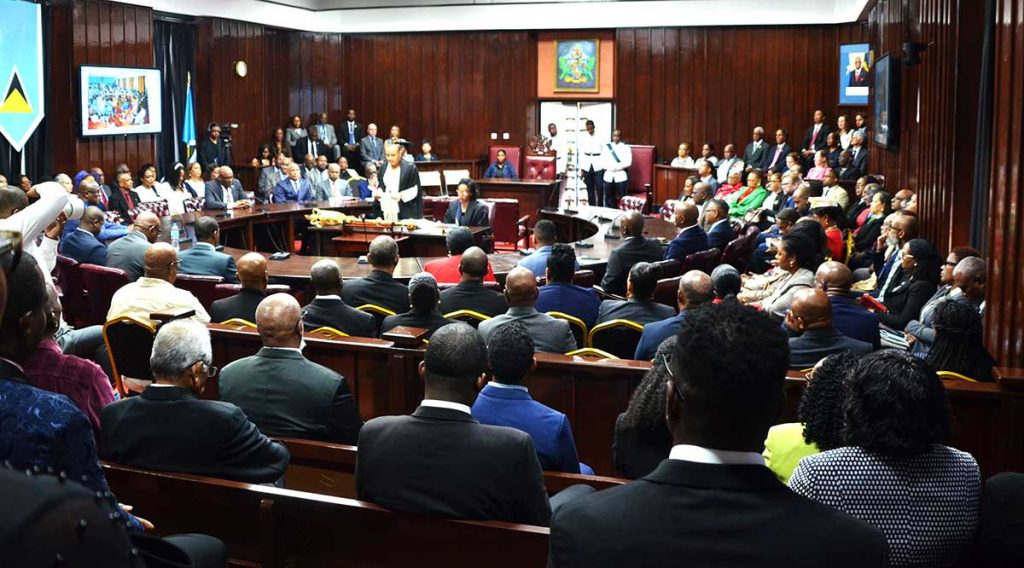
As momentum grows across the Caribbean reparations movement, Saint Lucia’s youth are preparing to take a leading role in discussions on historical justice and the legacy of African enslavement through a planned National Youth Parliament initiative.
The exercise forms part of wider efforts to deepen public understanding of the CARICOM 10-Point Plan for Reparations and the United Nations Declaration on the Trafficking of Enslaved Africans.
Organizers say the initiative is designed to ensure young people are directly involved in conversations surrounding reparatory justice, colonial history, and the long-term effects of the transatlantic slave trade.
Repair Campaign Community Organizer in Saint Lucia, Sherween Gonzales, explained that the decision to host a youth parliament stemmed from her educational background and a desire to engage younger generations in the reparations movement.
“Because I’m from an education background and I’m a lecturer by profession, I decided I must do youth parliament,” Gonzales said.
“I did not know much about it, I’ve never seen a youth parliament. However, I know if something is to happen or if any change is to be made, you must engage the youth.”
She stressed that the reparations movement predates the current generation and will require sustained advocacy into the future.
“They must know about this because this reparations, it didn’t start with us, it started a very long time ago and we don’t know how long it’s going to take, when it’s going to happen,” Gonzales stated. “So, I believe one of the most important aspects is to get the youth involved.”
Participants in the upcoming debate say the experience has already broadened their understanding of reparations beyond financial compensation.
Youth Parliamentarian Delicia Daniel said the process has encouraged deeper reflection on the meaning and purpose of reparatory justice.
“So far I’ve learned that reparations it’s not just about the financial part of it and I think for me that is the most important part so that you can understand the concepts before you can make a solid judgment on it,” Daniel explained.
“I think it’s the learning process for all of us right now because a lot of us when we hear reparations that’s the only thing we think of is to get money back.”
An economics student at the University of the West Indies and Youth Parliamentarian, Jada Volson, said the issue has gained increased international attention, particularly following discussions at the United Nations.
“It’s not my first time. I have heard about it through the UN resolution that took place on the 25th of March,” Volson said.
She added that while attending the Commission on Population and Development in New York at the United Nations, the issue of reparations surfaced repeatedly.
“It was a topic that came up quite frequently because the transatlantic slave trade is most definitely one of the greatest crimes against humanity,” she stated.
Volson argued that Caribbean institutions must become more proactive in educating young people on the historical realities of enslavement and the significance of reparatory justice.
“I think institutions in the Caribbean need to be more willing to speak to their young persons about informing them and making sure that there’s a call to action amongst us,” she said.
First Vice President of the National Youth Council and Youth Parliamentarian Dequan Charles believes the exercise will create a more personal connection to the region’s history.
“I think it will definitely be more collaborative because now you have a lot of the youth parliamentarians that we need to do research and to find out about what our people went through, so it will be more personalized for sure,” Charles said.
“So, I’m definitely interested to see how this youth parliament will go.”