

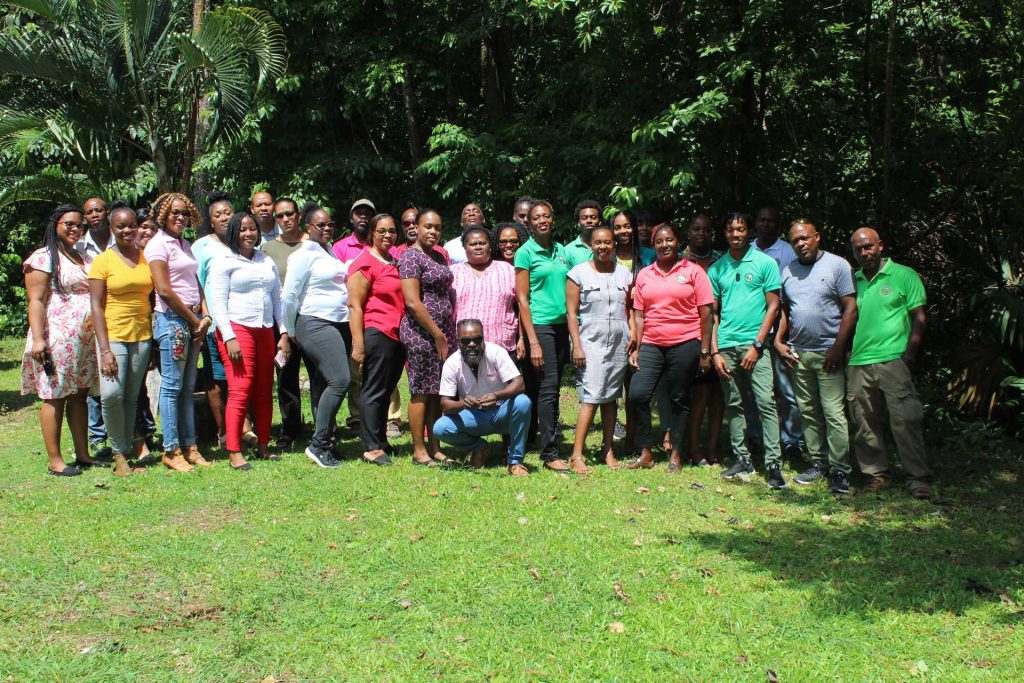
Saint Lucia is moving to strengthen its climate action strategy through a multi-day stakeholder engagement focused on quantifying carbon capture within restored ecosystems.
The initiative, under the South East Coast Project, brings together technical experts, government agencies and community stakeholders to better understand and measure the environmental impact of restoration work across key coastal areas.
National Project Coordinator John Calixte explained that the exercise centers on translating field data into measurable climate outcomes.
“Basically, it is calculating how much carbon has been removed from the atmosphere based on the restoration activities that we have undertaken in several areas along the south-east coast,” he said. “Consultants have sampled some of the areas where we are doing restoration, and over the last three days they have been teaching us how to use the data collected to calculate the carbon which is captured from the atmosphere.”
Team Leader of the Carbon Measurement Sequestration Project Dr David Lee highlighted the level of engagement among participants.
“The participants have been very involved and very interested, and that includes key stakeholders, community members and the Departments of Fisheries, Forestry and Sustainable Development,” he noted.
Dr Lee emphasized the scientific basis underpinning the work, pointing to the role of vegetation in mitigating climate change.
“Climate change is being driven by carbon dioxide in the air, and when plants grow, they trap carbon dioxide through photosynthesis, and we can measure that carbon,” he said.
He added that the ability to quantify carbon capture has important implications for both environmental reporting and economic opportunity.
“Once we can measure it, Saint Lucia will be able to report to the rest of the world how much carbon it is trapping,” Dr Lee explained. “There is also the potential for carbon credits, meaning there is an opportunity for the country to earn from these efforts.”
Officials say the initiative represents a critical step in aligning local conservation work with international climate reporting standards, while opening pathways for sustainable financing through emerging carbon markets.