

Saint Lucia’s health authorities are reinforcing surveillance and preparedness measures following the declaration by the World Health Organization (WHO) of a Public Health Emergency of International Concern (PHEIC) in response to the ongoing Ebola Virus Disease (EVD) outbreak in parts of Africa.
The declaration, made on May 17, 2026, relates to an outbreak affecting the Democratic Republic of Congo (DRC) and Uganda. While health officials stress that there are currently no cases of Ebola in the Caribbean, they say vigilance remains critical due to the region’s connectivity through international travel.
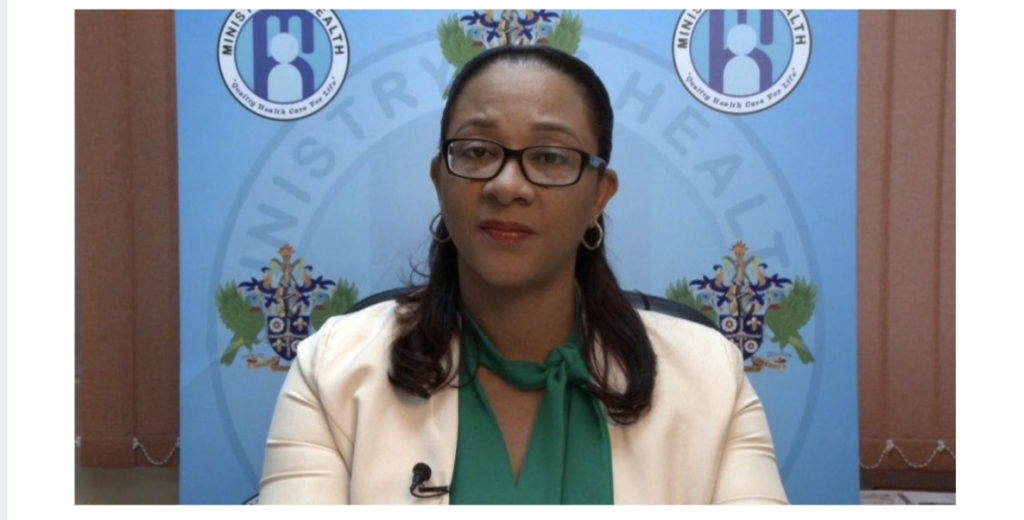
Chief Medical Officer Dr Sharon Belmar-George, to the press on June 2, said the WHO’s declaration highlights the importance of coordinated international action.
“The declaration of a public health emergency of international concern underscores the need for heightened international and regional vigilance and coordination, especially given the current situation in conflict-affected regions with limited access to health care services,” she explained.
“Although at present this event is not classified as a pandemic, coordinated international action is required.”
According to Dr Belmar-George, the outbreak is concentrated in eastern areas of the Democratic Republic of Congo and parts of Uganda.
“The current Ebola outbreak is concentrated in the Eastern Democratic Republic of Congo, Ituri, North Kivu and Sud Kivu provinces and Uganda, particularly Kampala,” she said.
The Chief Medical Officer noted that the outbreak is being driven by a relatively uncommon strain of the virus.
“The cause is the Bundibugyo Ebola virus strain, which is relatively rare, for which there are no licensed vaccines or specific therapeutics.”
Providing an update on the scale of the outbreak, Dr Belmar-George disclosed that, as of May 27, 2026, health authorities had recorded more than 1,000 infections.
“As of May 27, 2026, there were 1,018 total cases, including 1,011 in the Democratic Republic of Congo and seven in Uganda and 234 deaths, 233 in the Democratic Republic of Congo and one in Uganda, with a case fatality rate of approximately 23%,” she said.
Despite the severity of the outbreak overseas, regional public health agencies continue to assess the risk to the Caribbean as low.
“There are no cases of the Ebola virus disease in the Caribbean region. The current risk of this disease in the Caribbean is assessed by CARPHA as low,” Dr Belmar-George stated.
She cautioned, however, that the possibility of imported cases cannot be ignored.
“However, given that the introduction of the disease to the Caribbean region can happen through travel associated with importation and the region’s high connectivity through international travel, it is important that the national surveillance system is strengthened.”
Health officials are also reminding the public about how the virus spreads. Dr Belmar-George explained that Ebola is transmitted through direct contact with bodily fluids of infected individuals and contaminated materials.
“Ebola virus is transmitted through direct contact with the blood, secretions, organs or other bodily fluids of infected persons. It is also transmitted through contact with surfaces and materials contaminated with these fluids and wildlife. Persons infected with Ebola become infectious as they develop the symptoms.”
In response to the international health alert, the Ministry of Health, Wellness and Nutrition has activated a range of preparedness measures designed to strengthen the country’s ability to detect and respond to any potential threat.
“The Ministry of Health, Wellness and Nutrition is closely monitoring the outbreak and preparing plans for prevention, early detection and management in country in consultation with the regional public health agencies,” Dr Belmar-George said.
She added that authorities are increasing monitoring at ports of entry and enhancing travel screening procedures.
“Surveillance is being strengthened at the level of the ports and travel history screening.”
Additional measures include strengthening healthcare systems and ensuring frontline workers are equipped to respond effectively should a suspected case arise.
“Health systems are being strengthened through the development of national preparedness plans for viral hemorrhagic fevers, healthcare worker sensitization, reinforcing infection prevention and control measures, review of personal protective equipment and ensuring clear protocols for safe patient management,” Dr Belmar-George stated.
Health officials say they will continue working closely with regional and international partners to monitor developments and ensure Saint Lucia remains prepared while the outbreak continues overseas.