

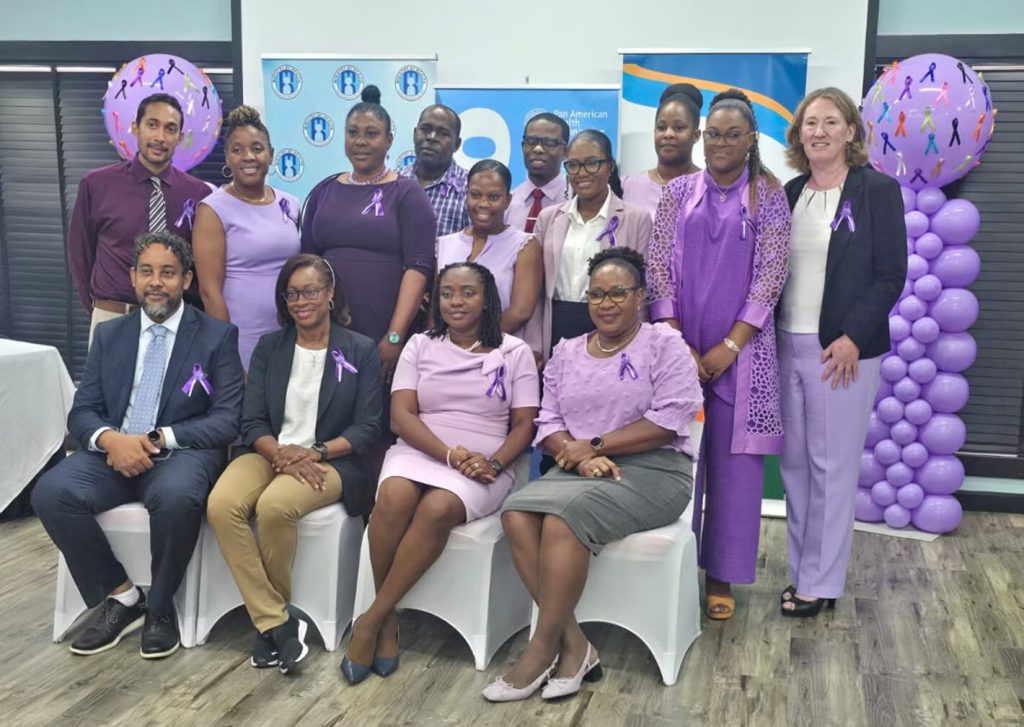
Health authorities in Saint Lucia have officially launched its first National Cancer Registry, a major step towards improving cancer prevention, treatment and patient outcomes through the collection of reliable national data.
The initiative was launched under the theme “Data for Action: Building a Stronger Response to Cancer,” bringing together senior health officials, clinicians and regional partners committed to strengthening the country’s response to one of its leading causes of death.
Officials said the registry will provide comprehensive information on cancer cases across the island, allowing health authorities to better understand disease trends, improve prevention strategies and allocate resources more effectively.
National Epidemiologist Dr Michelle Francois described the registry as a critical tool for strengthening evidence-based healthcare.
“Every cancer case reported contributes to a clearer understanding of the burden of cancer, strengthens our ability to plan effective prevention and control strategies, and provides the evidence needed to improve patient care and health outcomes across our island.”
She stressed that the launch represents an important milestone rather than the completion of the country’s work.
“So as we officially launch this registry, let us recognize that this is not the beginning of our journey, but an important milestone in an ongoing process.”
Dr Francois added that the information gathered will guide future healthcare policies and services.
“Together we are strengthening the foundation for evidence-based cancer prevention and control, ensuring that the information we collect today will shape policies, better services, and better outcomes for future generations.”
Chief Medical Officer Dr Sharon Belmar-George underscored the urgency of the initiative, noting that cancer has remained the country’s leading cause of death for more than a decade.
“Malignant neoplasms has been the number one cause of mortality for the past 16 years.”
She said the statistic demands sustained national attention.
“Not a statistic that we should accept lightly.”
“It is a matter that demands our urgent and sustained attention because without accurate comprehensive and timely data we really fighting this battle blindfolded.”
According to Dr Belmar-George, the registry will provide the evidence needed to improve national cancer programmes.
“So the registry will ensure that we have the evidence to back our programs and also to allocate our resources strategically and effectively towards the reduction of morbidity and mortality secondary to cancers.”
Senior Technical Officer at the Caribbean Public Health Agency (CARPHA), Chatoyer Bobb, said the establishment of a population-based cancer registry marks a significant advancement for Saint Lucia’s public health system.
“Today marks a major step forward. A population-based cancer registry, as we’ve heard before, will provide reliable data.”
He said the information collected will support prevention, screening, patient care and research.
“We need to focus on trends, strengthen prevention and screening, improve patient care, support research, and ensure that our resources are directed where they are needed most.”
Bobb added that the registry’s theme reflects the broader value of quality health information.
“This theme, data for action, building a stronger response to cancer, reflects our belief that quality data is the foundation of better health policies and better health outcomes, not just for cancer research and response to cancer, but throughout the health system.”
Health Minister Moses “Musa” Jn Baptiste described the registry as a commitment to every Saint Lucian affected by cancer.
“Today you are not launching a cancer registry, you are launching a promise.”
“A promise to Saint Lucians that every diagnosis will count, every case will teach you something, and every data set will inform a better decision.”
Officials said the National Cancer Registry will serve as a cornerstone of Saint Lucia’s long-term strategy to strengthen cancer surveillance, improve healthcare planning and ultimately reduce the burden of the disease across the island.