

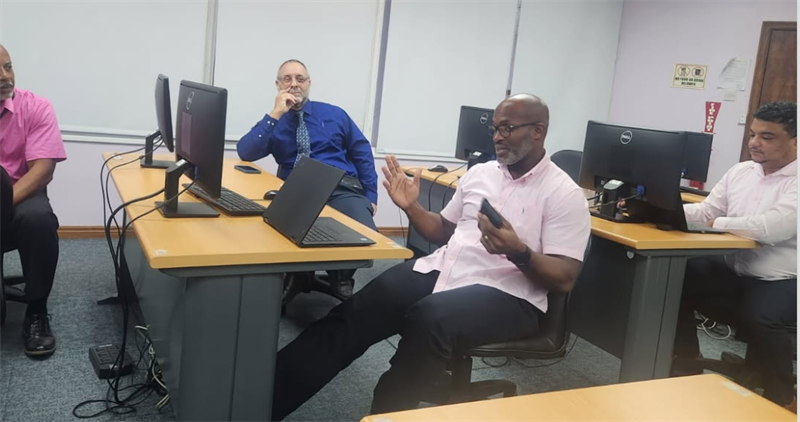
Public servants across Saint Lucia have participated in a Safe Cyber Spaces Institutional Session aimed at improving cyber hygiene and strengthening institutional resilience within the public sector.
The workshop, hosted under the Caribbean Digital Transformation Project within the Division of Public Sector Modernization, was conducted in partnership with the CARICOM Implementation Agency for Crime and Security.
It forms part of a wider regional effort to modernize digital governance systems and combat the growing threat of cybercrime.
Project Manager Sheralin Monrose-Gustave said the session brought together a wide cross-section of stakeholders, including public servants, law enforcement agencies, and regulatory bodies.
“As part of ongoing activities, we have today’s workshop which deals with safer cyber spaces and really targets public servants, law enforcement agencies, as well as regulatory bodies,” she explained. “It is meant to review the digital hygiene practices of these agencies and see how we can work together collaboratively to address key cyber security risks.”
Monrose-Gustave emphasized the importance of identifying vulnerabilities and strengthening coordination among institutions.
“We want to identify the risks, look at the operational gaps and see how we can come together in a coordinated fashion to improve our digital hygiene practices,” she said.
Cyber Analyst Candy Saunders-Alfred of CARICOM IMPACS highlighted the regional nature of cyber threats and the need for collective action.
“This allows us to provide information from a regional perspective and determine how best we can coordinate,” she noted. “Cyber crime is not an individual or per country issue. It is something that affects the region, and this is where cyber security comes in as it relates to protecting our critical national infrastructure.”
She added that collaboration is essential to building a more secure digital environment across Caribbean states.
Meanwhile, Systems and Data Administrator Mervin Alexis from the Government’s Information Technology Services described the session as both timely and informative.
“I must say the event has been very informative. Similar to past events, you learn as you go along,” Alexis said. “Cyber security is everybody’s business and not only for information technology professionals. It extends to users and how they respond and act.”
The session forms part of the broader objectives of the Caribbean Digital Transformation Project, a World Bank-funded initiative designed to enhance public service delivery, expand digital access, and modernize ICT infrastructure across the Eastern Caribbean.
Through collaboration with regional partners such as CARICOM IMPACS, officials say the initiative continues to play a vital role in strengthening digital resilience, improving awareness, and safeguarding critical systems against evolving cyber threats.