

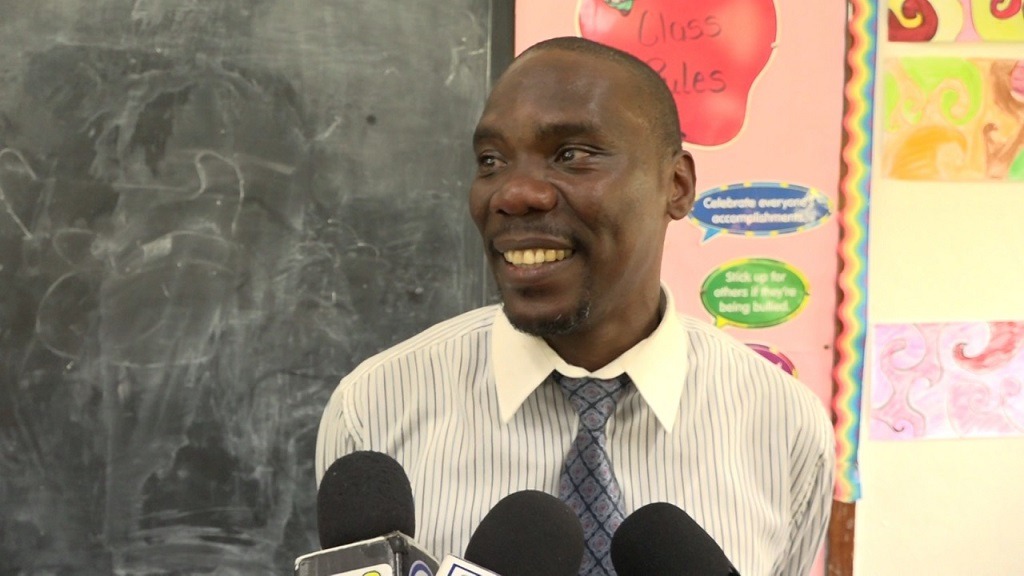
A two-day conference hosted by the National Principals’ Association is underway in Saint Lucia, bringing together educators to refine policies and approaches aimed at better supporting students with special needs.
The initiative places emphasis on building a more inclusive education system, with participants exploring strategies to ensure that all students feel supported and valued within the classroom.
Guest presenter Dr Steve Sider, a professor at Wilfrid Laurier University in Canada, highlighted the global importance of inclusive education.
“One of the things that is a priority for governments around the world, including in Saint Lucia and within the Eastern Caribbean, is to build inclusive school environments where every child belongs,” he said.
Drawing on personal experience, Sider underscored the impact educators can have on students’ sense of belonging.
“I talked about my own experiences moving from another country to Canada where English was not my first language and where I had some underlying health issues,” he explained. “What were the things that one particular teacher did that made me feel like I belonged?”
He stressed that teachers and school leaders have a collective responsibility to foster inclusive environments.
“We have the collective ability to make a difference,” Sider said. “We meaning the teachers and the principals. That is the power of inclusive education.”
He also encouraged educators to approach challenges with confidence and collaboration.
“When an autistic child who is nonverbal comes into the school, we sometimes think we cannot manage,” he noted. “But when principals and teachers work together, that is where the real strength lies.”
President of the National Principals’ Association, Neal Fontenelle, echoed the call for a more personalized approach to student support.
“Dealing with special needs students as a person and not a statistic is important,” he said. “When we say we have two students with ADHD or three with dyslexia, that is not enough.”
Fontenelle emphasized the importance of recognizing each student as an individual.
“We talk about Adam who is diagnosed with ADHD, and we deal with Adam as a person, not as a statistic,” he said. “That brings a human touch to the process.”
The conference continues with discussions and workshops aimed at equipping school leaders with practical tools to enhance inclusion and improve outcomes for all students across the education system.