

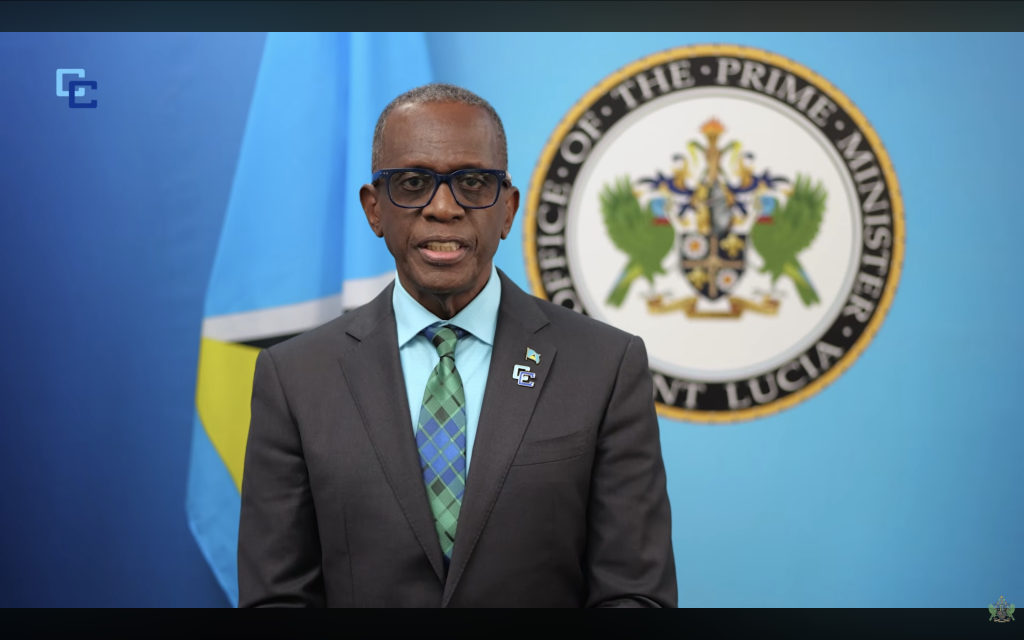
Prime Minister Philip J. Pierre has called on Saint Lucians and the wider Caribbean to view Emancipation Day not only as a commemoration of the abolition of slavery, but as a renewed commitment to securing economic freedom, opportunity and prosperity for future generations.
In his 2026 Emancipation Day message, Pierre reflected on the sacrifices of enslaved Africans, acknowledged the enduring legacy of colonial injustice, and urged Caribbean people to continue the work of emancipation through nation-building and regional development.
Addressing “my sisters and brothers of Saint Lucia and across our Caribbean community,” the Prime Minister honored those whose resilience made freedom possible.
“Today we remember the women, men, and children, those whose bodies were enslaved, but whose spirits could never be conquered,” Pierre said.
He paid tribute to those who endured unimaginable suffering while refusing to abandon their humanity.
“We remember those who endured cruelty beyond imagination, yet refused to surrender their dignity, their humanity, or their hope.”
Pierre said their determination continues to inspire generations.
“And because they endured, because they resisted, because they believed, we stand today as a free people.”
For that reason, he said, Emancipation Day carries profound national significance.
“That is why Emancipation Day is not simply another date on our calendar. It’s a sacred reminder of where we have come from, a reminder of what we have overcome, and of what still lies before us.”
The Prime Minister stressed that while slavery ended, many of its consequences remained.
“My fellow citizens, the end of slavery was not the end of injustice.”
He noted that formerly enslaved people entered freedom with few resources or opportunities.
“Our ancestors walked into freedom without land, without wealth, without compensation, without opportunity. Yet, those who benefited from their labor were rewarded.”
Pierre said confronting that history is essential to building a better future.
“History cannot be changed, but history must be understood. Because only when we understand our past can we fully appreciate our responsibility to shape a better future.”
“That responsibility belongs to every generation. It belongs to us.”
Reflecting on the region’s history, Pierre described the Caribbean as a place forged through hardship but defined by resilience.
“Our Caribbean story is unlike any other. It’s a story shaped by the dispossession of indigenous people, the suffering of African enslavement, the experience of indentureship, and centuries of colonial rule.”
“But it’s also a story of extraordinary resilience. Out of pain, our people created beauty. Out of struggle, our people created strength.”
Pierre argued that the true work of emancipation is still ongoing and extends beyond political independence.
“My brothers and my sisters, the work of emancipation continues.”
“Political freedom alone is not enough. Our people deserve economic freedom, they deserve opportunity, they deserve ownership, they deserve prosperity.”
He called for Caribbean economies that empower citizens to create wealth and succeed at home.
“We must build economies where Caribbean people are creating wealth, not merely consuming it.”
“Where our young people see opportunity at home, where entrepreneurs can succeed, where our farmers, fishers and manufacturers are valued, where hard work is rewarded with dignity. That is the Caribbean we must build,” he said.
The Prime Minister concluded by placing young people at the center of the region’s future, saying they must be equipped to lead and transform Caribbean societies.
“Our young people must remain at the center of everything we do.” “Every child deserves a chance to dream. Every young person deserves a chance to achieve.”
He said education must prepare future generations to innovate and lead.
“Our schools must prepare them to innovate, to lead, to build businesses, to master technology, to transform our societies.”
“We want our young people to fulfill their potential, to pursue lives of purpose and achievement and to use their talents to strengthen our nation and our Caribbean community.”