

The murder of 24-year-old Joy St. Omer has reignited national debate over domestic violence, victim protection and crime prevention, prompting renewed calls for stronger intervention measures and a coordinated strategy to address what opposition figures describe as a growing crisis.
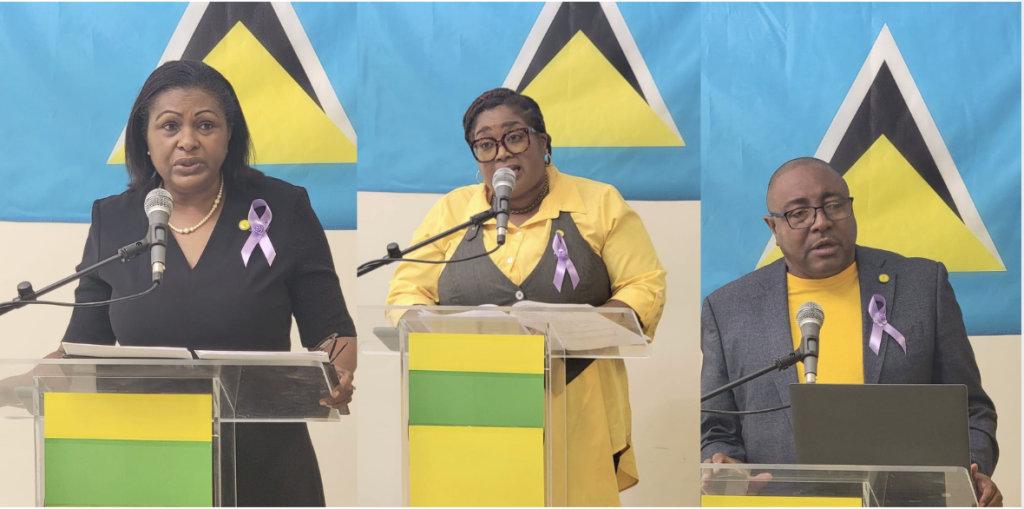
Members of the United Workers Party (UWP), speaking at a press conference on Thursday, May 28, argued that more must be done to ensure vulnerable individuals receive support before situations escalate into tragedy.
UWP member Laura Jn Pierre-Noel said Saint Lucia must strive to become a society where victims feel confident seeking assistance and where support systems respond effectively to warning signs.
“Saint Lucia must become a country where people feel heard, valued, protected, and supported,” she stated. “A country where women feel safe seeking help. A country where victims are believed. A country where support systems respond before situations escalate into tragedy.”
Pierre-Noel’s comments come amid heightened public scrutiny of how cases involving domestic violence and protection orders are handled by institutions responsible for safeguarding victims.
Also addressing the issue was UWP member Titus Preville, who argued that the effects of crime extend far beyond individual incidents and have lasting consequences for communities and the wider society.
“The social cost of crime is reflected in the fear and suspicion that is developed amongst the people in the community,” Preville said. “The emotional cost of crime is reflected in the increased levels of anxiety among the people. And anxiety leads to the development of non-communicable chronic diseases.”
He further linked criminal activity to broader social and moral consequences.
“Those atrocious acts of criminality and homicides, this is actually sinful and it denies us the chance at eternal life,” he said. “There is an economic cost to crime.”
Meanwhile, former Minister for Health and Gender Affairs Sarah Flood-Beaubrun called for the Government to move beyond discussions and recommendations and instead develop a comprehensive action plan based on existing research and policy proposals.
“Put some people in a room. Serve them tea, coffee, food for a whole week if you have to,” Flood-Beaubrun remarked. “Allow them to comb all these recommendations. We will find all the answers there. We will find the answers there.”
She argued that numerous studies and consultations have already identified many of the solutions needed to address crime and violence.
“There’s nothing that needs to be recommended that has not yet been recommended in some forum,” she said.
“Find them, collate them, come up with a master plan, then get some experts in all aspects of crime, criminology, and whatever have you, and get them now to look at that master plan and come up with a blueprint for the way forward.”
The calls come as public concern continues to grow following St. Omer’s death, with many citizens demanding stronger protections for victims of domestic violence, greater accountability within the justice system, and more effective measures to prevent similar tragedies in the future.