A new health advocacy organisation has entered Saint Lucia’s public arena, igniting strong debate about wellness, personal choice, and the lessons carried over from the COVID-19 era.
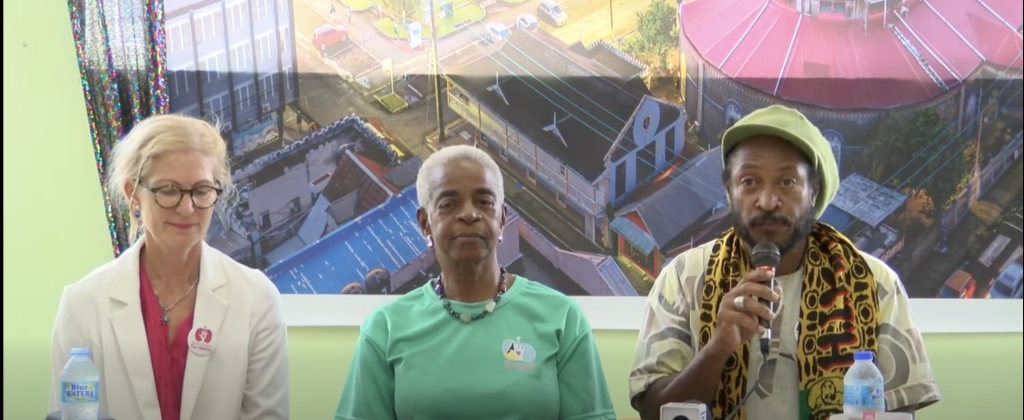
The World Council for Health Saint Lucia Chapter was formally unveiled on Wednesday during a press conference hosted by the Iyanola Council for the Advancement of Rastafari and Pan-African People at the CDF Conference Room.
The event brought together local and international voices who argued that Saint Lucians should have greater control over decisions affecting their bodies, their wellness practices, and their approach to natural and conventional medicine.
Aaron Alexander, President of the Iyanola Council for the Advancement of Rastafari and Pan-African People, described the partnership as both timely and necessary. He stated that his organisation has consistently defended personal autonomy in health.
According to Alexander, “there should be health sovereignty in Saint Lucia where people have a right to decide what goes into their body and no government should decide that for them.”
He added that “no Minister of Health and certainly not any CMO should decide what people should take into their bodies.” He said it was therefore “a natural fit that ICA has partnered with World Council of Health Saint Lucia Chapter.”
Physician Dr Gilbertha St Rose also urged Saint Lucians to assert greater control over their health choices, particularly through natural and traditional remedies.
She argued that “Big Pharma is too pleased with that development in terms of us utilizing our herbs more.” She told attendees that real authority lies with the public, stating, “you the people are the one that speak. You are the people that have the power.”
Dr St Rose framed the launch as part of a movement toward empowerment.
“We are about to take our power back,” she said. She added that the group is “so happy to be able to be entangled and embraced and directed and helped with our World Council for Health.”
International representative Dr Tess Lawrie spoke about the philosophy guiding the global organisation. She said the World Council for Health holds a holistic view of human wellbeing.
According to Dr Lawrie, “our approach is really totally different. We believe that human beings are a great benefit to the world and we’re here to learn and grow in harmony and cooperation with nature.”
She explained that this approach places value on balance between people and the environment. “Looking after nature and nature looks after us,” she said. Dr Lawrie added that the work of the organisation is designed to help individuals reclaim control over their wellbeing, noting that its publications are created “for people to be able to take back responsibility for their health.”
The group’s leaders say they intend to strengthen public access to information and expand conversations surrounding wellness, rights, and community empowerment.