

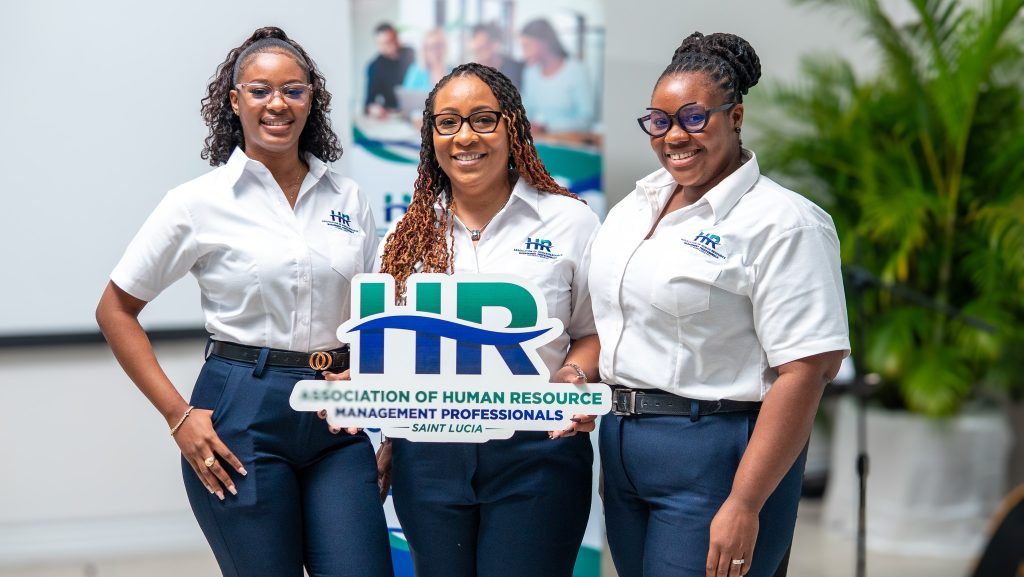
As Saint Lucia observes International HR Day, human resource professionals are urging employers to take workplace mental health, burnout and employee well-being more seriously, warning that healthier work environments are now essential to business sustainability and long-term productivity.
President of the Association of Human Resource Management Professionals, Goretti Paul, said organizations must move beyond treating workplace wellness as an optional initiative and instead recognize it as a critical business priority.
“The workplace health conversation needs to be explored a bit further because we believe that workplace health is a business imperative now rather than just a wellness issue,” Paul stated. “At the Association, we believe the conversation around workplace health can no longer be treated as simply a wellness initiative or a nice-to-have program. It has become a business and workforce sustainability issue,” she added.
Paul said the growing pressures facing modern workplaces require employers to adopt more intentional and comprehensive approaches to employee well-being.
“We are encouraging employers to take a far more intentional and holistic approach to workplace well-being,” she explained.
“This includes strengthening leadership capability and people management practices because leadership behavior has a direct impact on workplace culture, on the stress levels within the working environment, on trust, and on employee engagement,” Paul noted.
She also highlighted the importance of creating psychologically safe workplaces where employees feel supported and respected.
“We are also encouraging organizations to improve communication, to create psychologically safe workspaces, and to address issues such as workload management, burnout, and employee support more proactively,” she said.
According to Paul, organizations must also place greater emphasis on fairness, accountability and inclusion within workplace culture.
“Another important area is creating healthier workplace cultures that are grounded in fairness, respect, accountability, inclusion, and consistent leadership behavior,” she stated. “Organizations must also recognize that well-being is not only physical. Mental and emotional well-being matter equally, particularly in today’s fast-changing and high-pressure work environments,” Paul added.
Reflecting on the significance of International HR Day, Paul said the occasion highlights the increasingly strategic role played by human resource professionals within modern organizations.
“International HR day is important because it recognizes that people are the center of every successful organization and HR professionals play a critical role in shaping that success,” she explained.
She noted that workplaces today are facing multiple challenges simultaneously, ranging from labor shortages to mental health concerns and technological disruption.
“Today’s workplaces are navigating rapid change, evolving employee expectations, mental health concerns, workforce shortages, technology disruption, and increasing pressure to remain competitive and resilient,” Paul said.
“So, HR professionals are often at the center of helping organizations manage these realities while balancing both the people and the business needs,” she added.
Paul further stressed that the human resources profession has evolved significantly over the years and now plays a central role in organizational leadership and transformation.
“The HR profession has evolved significantly over the years. HR is no longer simply administrative support,” she stated.
“HR professionals are now influencing leadership, shaping workplace culture, strengthening accountability, supporting organizations through transformation, and helping businesses build healthier and more sustainable workplaces,” Paul concluded.