
The Ministry of Health, Wellness and Nutrition will officially implement an Event-Based Surveillance (EBS) system aimed at improving the early detection and response to unusual public health events across Saint Lucia.
The new system is designed to assist with the timely collection and investigation of reports from both healthcare workers and community members, allowing the ministry to take a more proactive approach to emerging health risks.
Effective February 2, members of the public will be able to report public health threats or unusual events by calling 311, from Monday to Friday between 7.00 am and 7.00 pm. The service will be provided free of charge, and all information shared will be treated as confidential.
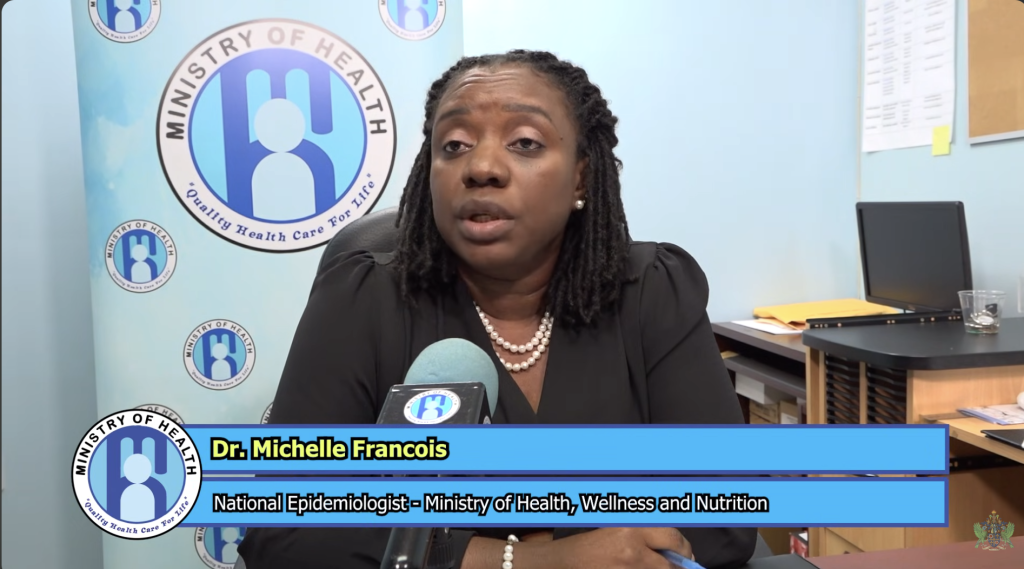
National Epidemiologist Dr Michelle Francois said the initiative responds to a longstanding gap in how public concerns were previously communicated to health authorities.
“We noted that the public, they have been reporting to us and we appreciate that. However, there wasn’t a structured reporting mechanism in place for them to do so,” Dr Francois explained.
She noted that, in the past, information often reached the ministry informally, reducing the likelihood of timely action.
“What you would have is persons calling into the ministry or they’re talking to a friend of a friend who works at the ministry to get that information to us. And unfortunately, sometimes that information would not reach the right place,” she said.
Dr Francois said the EBS system now provides a clear and direct channel for reporting concerns.
“With this system, we have created a reporting mechanism or structure whereby they can report any events or public health concerns that they have directly to the ministry. It is confidential and we can act upon it,” she added.
A key feature of the system is its strong emphasis on community involvement, with information originating directly from everyday observations made by residents.
“It incorporates the community and the information comes from community members,” Dr Francois said.
She outlined scenarios in which the public could play a critical role in early detection, including concerns observed in schools.
“For example, a parent at a school, if you notice you dropping your child off to school and you notice that, for the last few weeks, several children have been absent, you can now call and notify the Ministry of Health and we can launch an investigation,” she explained.
She noted that while such occurrences may turn out to be unrelated, they still warrant closer examination.
“It may be unrelated, but certainly it warrants an investigation,” she said.
Dr Francois also pointed to environmental observations as another important reporting area.
“It could be you walking on the beach and you notice dead animals, dead birds, for example, on the beach. That is something unusual for you. So, you report it to the Ministry, and we contact the relevant officials,” she said.
She explained that the EBS system facilitates coordination across government agencies, ensuring a more comprehensive response.
“It may be other ministries because using this system, we bring different ministries and different units together. So, we have a more holistic approach to our response as well,” Dr Francois added.
The ministry said the introduction of the EBS system represents a significant step towards strengthening public health surveillance and improving the country’s readiness to respond to potential health threats.