

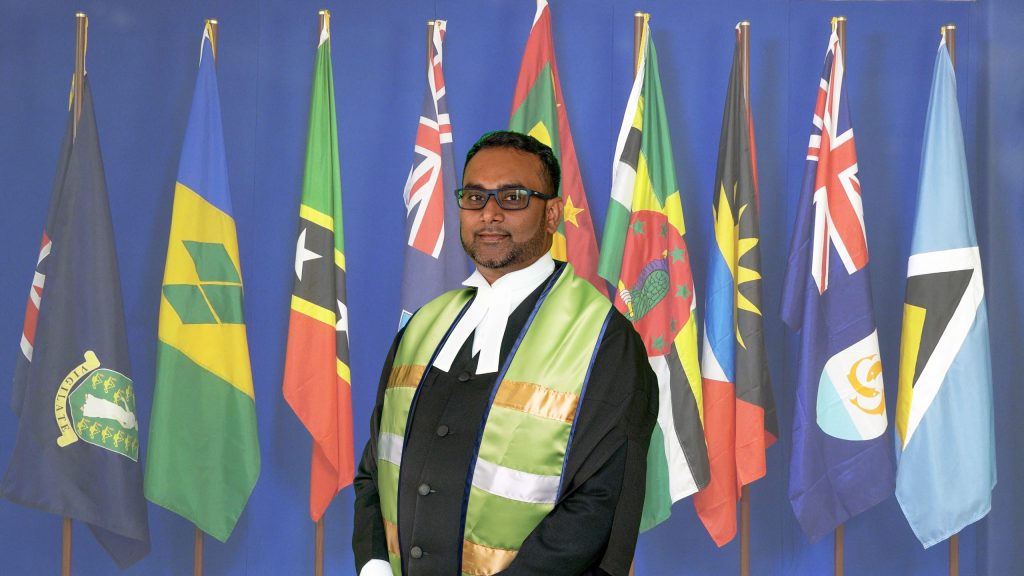
The role of estate planning as a vital mechanism for justice was brought into sharp focus during the fourth public education lecture hosted by the Eastern Caribbean Supreme Court.
The session, presented by Justice Alvin Pariagsingh, examined how proper estate planning can protect vulnerable family members, reduce conflict and assist the courts in delivering fair and equitable outcomes.
Justice Pariagsingh emphasised that estate planning is not reserved for the wealthy but is relevant to anyone with property or dependants.
“In reality, anyone who owns property, has dependants or has people they care about has estate planning,” he said. “Estate planning is not about how much you have. It is about ensuring that whatever you do have is dealt with according to your wishes.”
He explained that at its core, estate planning centres on personal intention and legal certainty.
“At its core, estate planning is about intention and control. It allows the law to give effect to your intentions rather than relying on assumptions or rigid statutory regimes,” Justice Pariagsingh noted.
The presenter warned that the absence of a will often leads to prolonged and costly disputes that are difficult for the courts to resolve.
“These conflicts are oftentimes too far left for the resolution by the courts, usually after protracted litigation fraught with delay and costs,” he said.
Justice Pariagsingh highlighted the emotional strain placed on families when a loved one dies intestate.
“When a person dies without having made a will, families are unfortunately forced to navigate the legal system at a time of grief when emotions are already running high and oftentimes impairs reason and sometimes logic,” he explained.
According to him, such situations frequently result in disputes over property, damaged relationships and an overburdened court system dealing with matters that could have been avoided.
“Disputes may arise over property, relationships may deteriorate and the court system becomes burdened with avoidable litigation,” he added. “Estate planning helps prevent these outcomes by providing clarity, certainty and clear direction.”
Justice Pariagsingh also connected estate planning to the broader concept of access to justice, stressing that fairness goes beyond formal legal rights.
“That case underscores that access to justice is not merely about formal rights. It is about meaningful practical access,” he said. “It is also about preventing injustice before it hardens into exclusion.”
He concluded by underscoring the importance of dignity and equity in estate matters. “In estate matters, access to justice is deeply connected with fairness and dignity. It means that modern family structures must be recognised and protected. It also means that courts must be able to deliver outcomes that reflect equity rather than be enforced into rigid statutory results.”
The lecture formed part of the Eastern Caribbean Supreme Court’s ongoing public education programme, aimed at increasing public understanding of the law and its role in promoting justice across the region.