

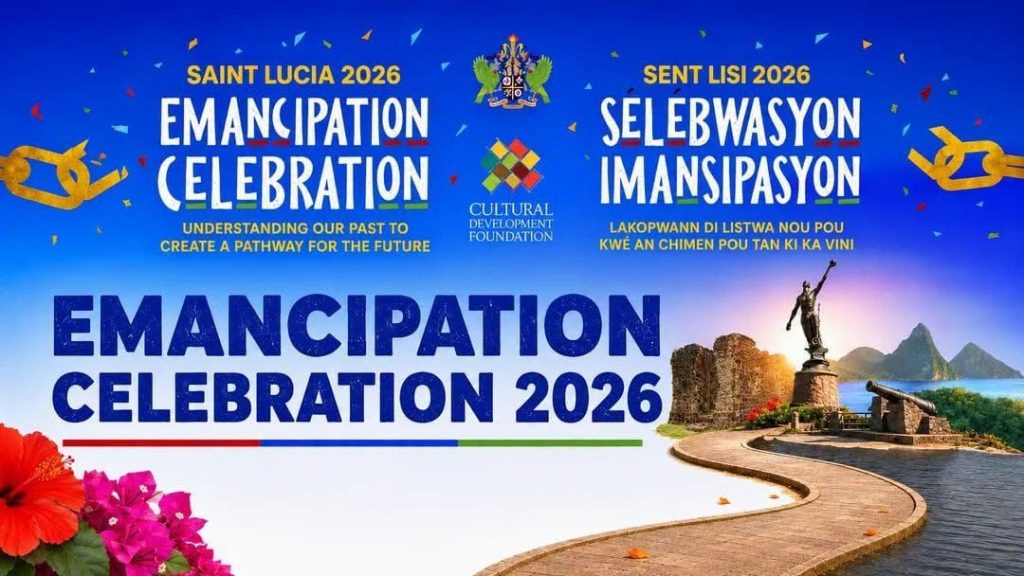
The Cultural Development Foundation (CDF) has officially launched Emancipation 2026, unveiling a month-long programme of activities aimed at commemorating the sacrifices of those who fought for freedom while encouraging Saint Lucians to reflect on their shared history and help shape the nation’s future.
The launch took place on Friday, July 24, at Serenity Park in Castries under the theme “Understanding Our Past to Create a Pathway for the Future.”
Mistress of Ceremonies Rhyesa Joseph opened the ceremony by placing this year’s observance within a broader historical context, noting several significant milestones being recognized in 2026.
“2026 marks 232 years since Saint Lucia’s first colonial emancipation from the French on February 4th, 1794. One hundred and ninety-two years since the abolition of slavery in the British Caribbean. It is the 47th anniversary of Saint Lucia’s independence and on March 25th, 2026, the UN General Assembly declared the transatlantic slave trade and racialized chattel enslavement the gravest crime against humanity,” Joseph said.
She stressed that the observance remains as relevant today as ever.
“Emancipation matters now as it has always mattered,” she declared.
Executive Director of the Cultural Development Foundation, Raymona Henry-Wynne, urged Saint Lucians to see history not as a destination, but as a guide for building a stronger future.
“The past is not asking us to live in it. It is asking us to learn from it,” Henry-Wynne said.
She added that remembrance should inspire action rather than nostalgia.
“We do not honor our ancestors by looking only behind us. We honor them by walking the paths they have made possible.”
Henry-Wynne said this year’s theme reflects a responsibility to move beyond simply remembering historical events.
“That is an invitation of this year’s theme, understanding our past to create a pathway for the future. History asks something of us, not simply to remember, but to understand.”
Culture and Creative Industries Minister Dr Ernest Hilaire said an understanding of the legacy of slavery is essential to recognizing many of the challenges Caribbean societies continue to face.
“If you understand the past, that that system would have done to human beings what it did to Black people during slavery, for the sake of generating profit, you can understand what we are going through now and why it will not end,” Hilaire said.
He argued that historical awareness should help shape future decision-making and strengthen the country’s resilience.
“We must create a pathway that can navigate and be strategic and see openings and be agile and adaptive to make sure we can continue to deliver for our people,” the minister said.
The Emancipation 2026 programme will continue throughout the coming weeks with a series of cultural, educational and commemorative activities leading up to Emancipation Day on August 1. Organizers say the events are intended to honor the resilience of those who endured enslavement while encouraging national reflection on identity, justice and the future of Saint Lucia.