

A leading Saint Lucian economist has argued that reparatory justice must extend beyond financial compensation, urging Caribbean leaders to pursue structural reforms that would ensure any reparations received generate lasting wealth rather than temporary relief.
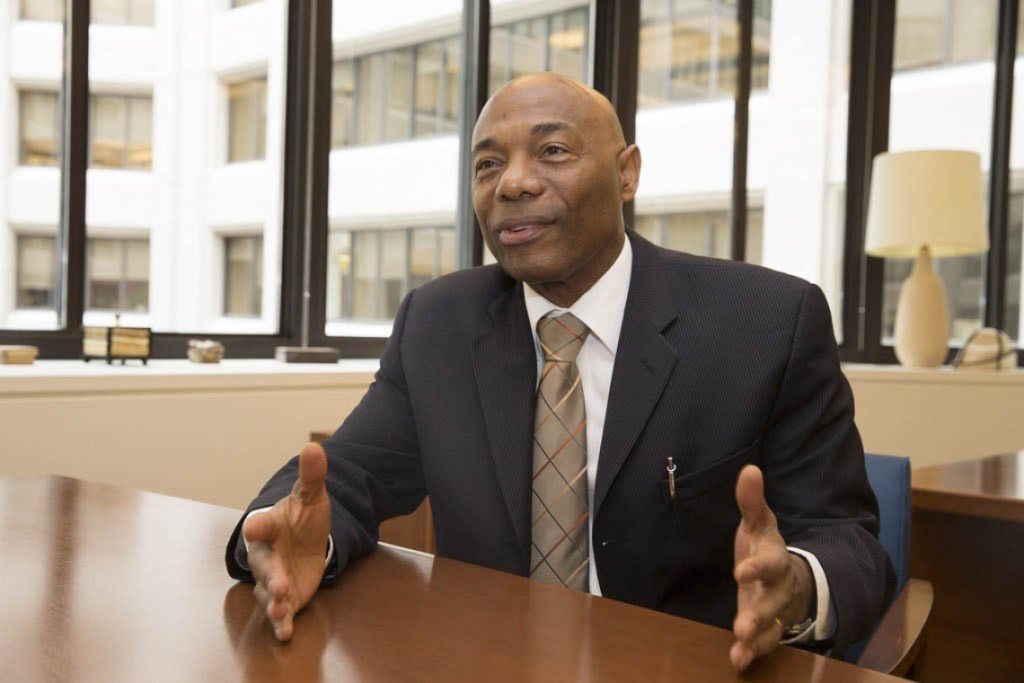
Dr Hyginus “Gene” Leon, former President of the Caribbean Development Bank (CDB) and current President of the Development Bank for Resilient Prosperity (DBRP), made the case during a Caribbean reparations forum, where regional leaders, academics and advocates gathered to discuss the next phase of the Caribbean’s campaign for reparatory justice.
Reflecting on Britain’s abolition of slavery in 1833, Leon highlighted what he described as a historical injustice that continues to shape discussions on reparations today.
“In 1833, Britain emancipated more than 800,000 enslaved people across its empire. To secure that abolition, the Treasury paid the slave owners £20 million, as PM Gonzales just reminded us, which was about 40% of the government’s entire annual budget, in more than 40,000 separate awards,” Leon said.
“Not a penny went to the people who had been enslaved.”
Leon argued that the region’s pursuit of reparations must focus not only on securing compensation but also on transforming the systems that have contributed to persistent economic inequality.
“Because if we don’t change the system, we will continue to have additional debt after we have cleared the current debt,” he said. “That is the part that is missing in the arguments that we are having today.”
He challenged participants to consider what would happen if reparations were paid in full immediately.
“So let me ask two questions to bring this home. And I think that’s, for me, the question that should keep all of us in here awake at night,” Leon said.
“Supposing the debt is paid. We agree on the amount, and we pay the debt, pay it in full this year, 2026. The first question we would need to ask in the spirit of sustainable development is how should we direct it for the best possible development?”
Leon proposed that governments adopt what he termed “wealth impact statements” to guide future investments, arguing that traditional measures of economic performance have failed to build sustainable prosperity.
“That’s why we need wealth impact statements, because wealth, by definition, is a balance sheet concept, a stock,” he explained.
He said investment decisions should be assessed according to how they affect four forms of capital: produced, human, societal and natural.
“If we measure what every investment means for that stock of all four capitals, produced, human, societal, natural, and we say the impact, that’s the wealth impact statement, the impact of what we are doing, how it increases, diminishes, or degenerates those capitals over time, then we will be investing on a balance sheet basis,” Leon said. “Not on the elusive, illusionary income statement that we’ve been doing for the last 500 years.”
Leon maintained that reparatory justice should not simply address historical wrongs but should also create a foundation for long-term economic resilience, ensuring that future generations benefit from investments that strengthen the Caribbean’s overall wealth rather than perpetuating cycles of debt and dependency.