

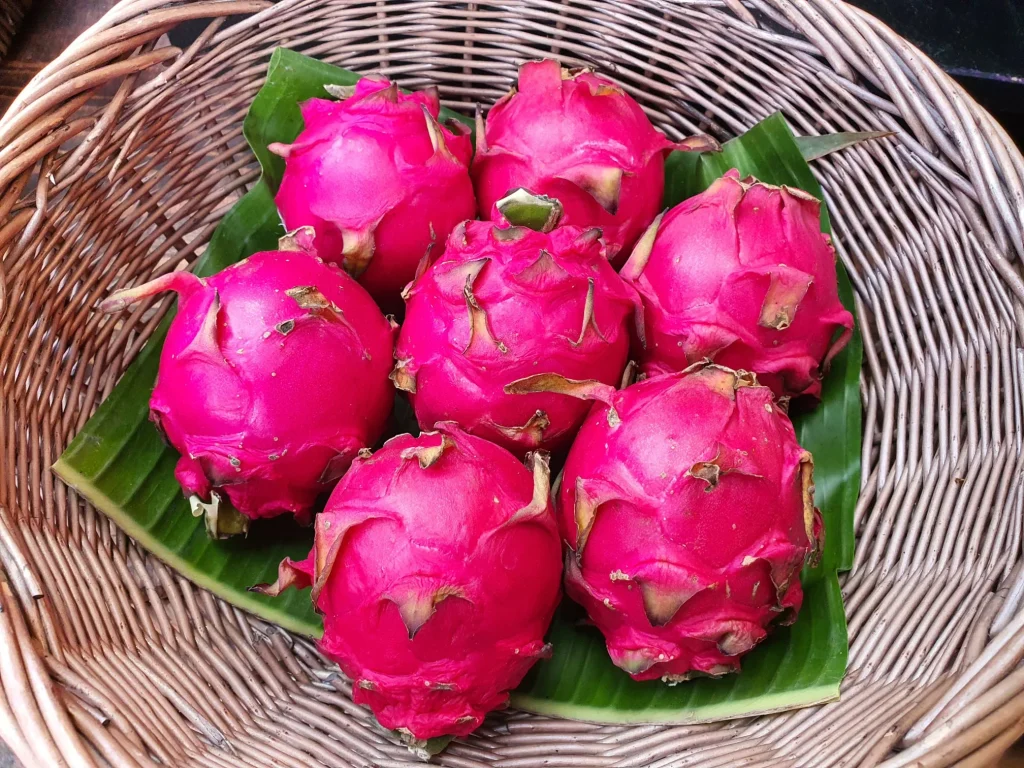
Agriculture officials have taken another step towards strengthening its agricultural sector with the launch of a new climate-smart nursery at the Union Demonstration Farm, an initiative designed to increase the production of dragon fruit and grafted guava while improving farmers’ resilience to climate change.
The launch, held late last week, brought together farmers, sellers, distributors, and other stakeholders.
The project, developed through a partnership between the Ministry of Agriculture and the Taiwan Technical Mission, aims to equip farmers with improved planting material and modern cultivation techniques to meet growing demand from both the local and tourism markets.
Senior Production Specialist with the Taiwan Technical Mission, Johnson Yang, said the crops were carefully selected because of their suitability to local conditions and their commercial potential.
“They are suitable for local conditions, have good market value, and can provide farmers with additional opportunities for income generation,” Yang said.
“More importantly, they are crops which we can demonstrate improve production methods, better seedling management, and stronger climate resilience.”
Taiwan’s Ambassador to Saint Lucia, Her Excellency Nicole Su, described the nursery as a long-term investment in the country’s farming community.
“More importantly, this nursery is a long-term investment in our farmers,” Ambassador Su said.
She explained that farmers who successfully complete the programme’s training workshops will receive planting material at no cost.
“The plan is to provide these seedlings of guava and dragon fruit to farmers who, if they have completed successfully their workshops, then they will be provided with these seedlings free of charge,” she said.
Agriculture Minister Lisa Jawahir said the initiative supports the government’s wider strategy of linking agriculture more closely with tourism while reducing the country’s dependence on imported produce.
“We know that our tourism industry welcomes visitors from around the world seeking authentic Caribbean experiences,” Jawahir said. “And there is no reason why those experiences should not include premium dragon fruit and guava grown right here in Saint Lucia.”
She added that increasing domestic production would create new economic opportunities while contributing to national food security.
“By connecting our agriculture with tourism, we create new income for our farmers, while reducing our imports and strengthening our economy,” the minister said.
The climate-smart nursery is expected to improve access to high-quality seedlings and encourage the adoption of modern farming practices, positioning Saint Lucian producers to supply both the hospitality sector and potential export markets while building greater resilience against the impacts of climate change.