

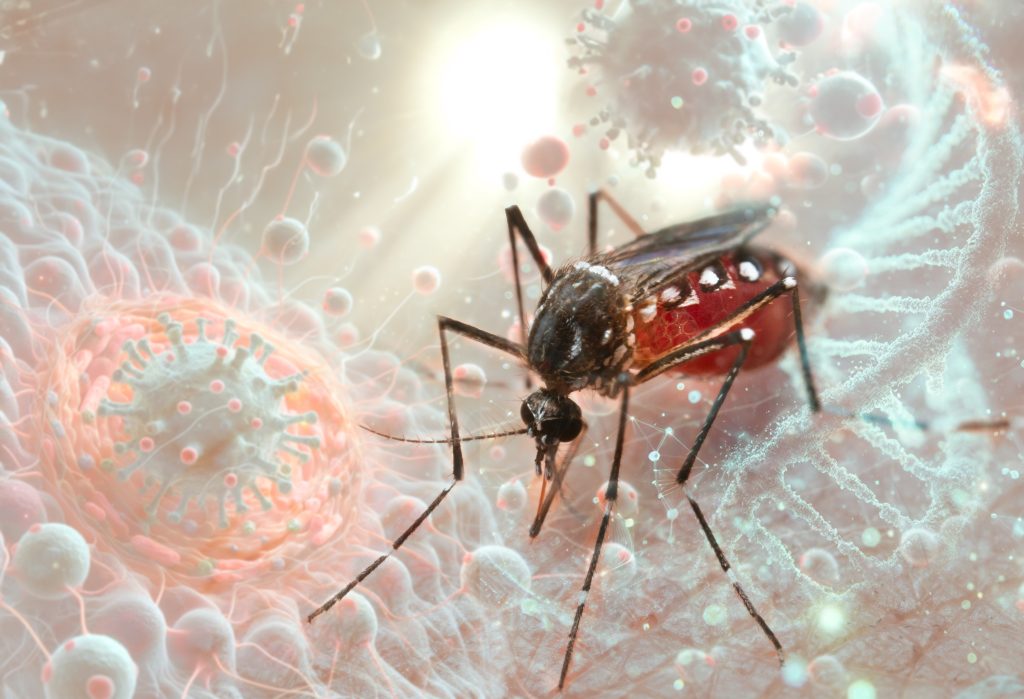
The Caribbean Public Health Agency (CARPHA) is urging Caribbean citizens to take immediate action against mosquito breeding as the region faces renewed concerns over vector-borne diseases, including dengue, malaria, yellow fever and chikungunya.
Caribbean Mosquito Awareness Week (CMAW) is an annual initiative aimed at reducing mosquito-borne diseases like Dengue, Zika, and Chikungunya.
Organized by CARPHA, the Caribbean Community (CARICOM), and Pan American Health Organization (PAHO), it emphasizes community action to eliminate breeding sites. The 2026 campaign, running May 11–15, focuses on source reduction under the theme “Stop Disease Transmission, Start Source Reduction”.
Speaking in observance of CMAW this week in a video release, Executive Director of CARPHA, Dr. Lisa Indar, warned that mosquito-borne illnesses continue to pose a serious public health threat throughout the region.
“Caribbean Mosquito Awareness Week is a timely reminder that mosquito-borne diseases remain a real and ongoing threat in our region,” Indar stated.
She noted that several countries continue to record outbreaks of vector-borne diseases.
“We continue to see outbreaks of vector-borne diseases or VBDs such as dengue and malaria in certain countries,” she explained.
According to Indar, CARPHA has also been closely monitoring emerging regional health risks linked to neighboring South American territories.
“Recently, CARPHA has been monitoring the re-emergence of yellow fever and chikungunya, especially in the South American territories, but noting the potential for rapid spread to the rest of the Caribbean,” she said. “The threat is real and the facts are clear.”
The CARPHA official stressed that the annual observance is intended not only to raise awareness, but also to encourage communities to take practical steps to reduce mosquito populations.
“This observance is not just about sharing information. It is about encouraging action,” Indar said. “It is about reminding each Caribbean citizen that mosquito control starts at home, in our schools, in our workplaces, and in our communities.”
She pointed to this year’s theme, “Stop Disease Transmission, Start Source Reduction”, as a call for collective responsibility across the region.
“The theme speaks to the power of collective effort and practical action,” Indar added.
Public health authorities throughout the Caribbean have repeatedly warned that stagnant water, poor waste management and changing climate conditions continue to create favourable environments for mosquito breeding, increasing the risk of disease transmission.
CARPHA is encouraging residents to eliminate standing water around homes and communities, properly dispose of containers capable of collecting water, and support national vector control initiatives as part of efforts to reduce the spread of mosquito-borne illnesses across the region.