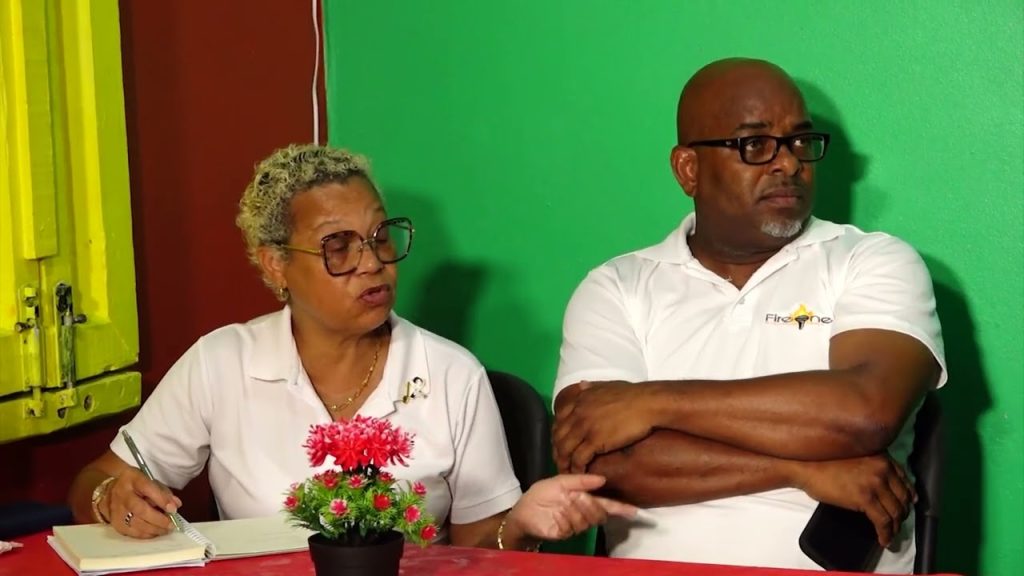
Calypso stakeholders are moving to strengthen the organization, representation and commercial structure of the art form with the establishment of a new Calypso Review Committee, which is also examining the future of the dormant Calypso Association.
The initiative is being driven by tent leaders and other stakeholders who believe the industry requires a representative umbrella organization capable of supporting artists and developing carnival music beyond the annual season.
Shawn Marcelin, leader of the Fire One Tent and a member of the Calypso Review Committee, said the group has expanded its focus beyond calypso to encompass other musical genres associated with Carnival.
“Tent leaders and we’ve expanded our boundaries now to include all other music genres that fall under carnival music,” Marcelin said.
“You would find there would be Soca, then we segment calypso and right now we have the Piton Soca Stars. You know, so we more or less trying to cover every aspect of music that deals with carnival, so we can look at an umbrella body to look after all this.”
Marcelin said the need for such an organization stems in part from the absence of an independent umbrella body representing calypso stakeholders for more than a decade.
“The last umbrella body that looked after calypso was more than 15 years ago and during that time it’s been more or less run by a small entity put in place by the government of St Lucia,” he said.
Caron Tobiere, another member of the committee, said a new organization should prioritize the interests and welfare of artists rather than operate as an extension of Government.
She pointed to previous arrangements under which performers received appearance fees in addition to prize money.
“But the appearance fees were paid to every single artist who appeared on that stage, and that was quite apart from the prize monies,” Tobiere said.
“So if you won, you’ve got your prize monies, but you also got your parents fee because if you don’t appear, there’s nothing happening on the stage.”
Tobiere said the system demonstrated why artists need an organization dedicated specifically to managing their affairs.
“And so it’s important that we understand the significance of having an organization that actually looks after the affairs of the artist and not necessarily functions as an arm of the government,” she said.
She noted that artists often rely on managers to negotiate contracts and other arrangements on their behalf, arguing that an umbrella organization could provide similar collective representation.
“The artists cannot always manage their affairs, and that’s why most artists have managers who come and make negotiations for them, and that is what happens with an organization that is an umbrella body,” Tobiere said.
The committee is also calling for greater attention to the development of the industry outside the Carnival season.
Tobiere said stakeholders must move beyond viewing artists primarily through the lens of the annual Carnival competitions.
“We need to not just look at artists just for a season of carnival as what CMMC is positioned to do because that’s what their rule is just to look after what happens during the season,” she said.
“But we need an organization that will say out of season what happens now, how are we getting training for our artists, how are we developing our artists, how are we developing our judges who are an essential part of what we do.”
She said the development of judges was particularly important because their performance can directly affect artists competing on stage.
“We need the judges and when the judges are not performing properly it affects the artists on stage,” Tobiere said.
The proposed umbrella body could therefore bring together artists, tent leaders, judges and other stakeholders involved in the production and development of carnival music.
“How are we going to take care of those people, bring everybody under one umbrella so that we all are able to develop and grow into what we know our artists and our art form can become,” Tobiere said.
The review of the dormant Calypso Association forms part of the wider effort to determine how the industry can establish a more sustainable structure, improve artist representation and create opportunities for training and development throughout the year.