

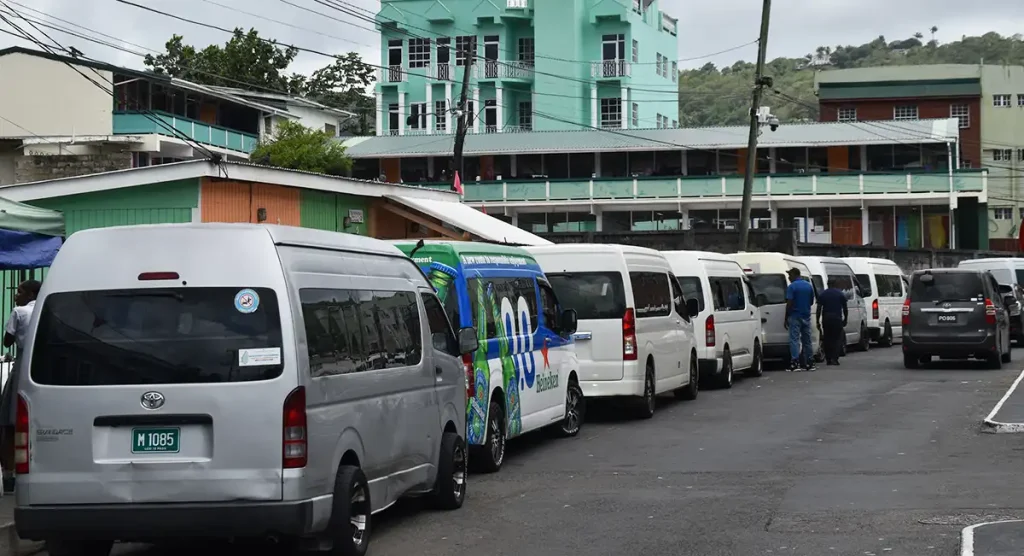
The National Council on Public Transportation is calling for a more modern and structured approach to Saint Lucia’s public transportation system, as commuters continue to experience uncertainty over when buses arrive.
NCOPT President Godfrey Ferdinand said some route associations already operate scheduled services, but the system is not sufficiently understood or recognized by the travelling public.
“Some of the route associations already have what you call a scheduled bus system, but it is not as, I would say, recognized by the public, travelling public as it should, or should I say knowledgeable as it is,” Ferdinand said.
He said the system works particularly well during the early morning period in many communities.
“In every community, everybody knows from six or five o’clock to maybe about nine o’clock what time the bus is,” he said.
However, Ferdinand identified the period between approximately 9 a.m. and 1 p.m. as a significant gap.
“The problem we have in the sector is the nine o’clock to maybe one o’clock when the buses are parked on the bus stops in the city and nobody knows when they’ll get the next bus in the community,” he said.
Ferdinand said the NCOPT has been discussing possible solutions with various bus associations, including the introduction of technology that would allow passengers to track buses and operators to better understand demand.
“I’ve been on the table with the different associations and that is a scheduled bus system, a cashless system, one where we run an app, so persons know where the buses are and also a system where we know where we need more buses and where we need less buses,” he said.
He said the objective is to replace what he described as an ad hoc approach with a system based on actual passenger demand.
“So, more of a scientific approach than just this ad hoc situation where persons feel, okay, let me go up the road and see if there’s persons,” Ferdinand said.
He compared the proposed approach to conducting market research before determining the level of service required.
“You do your market research, you know, okay, we need 300, we have 300 persons,” he said.
Ferdinand said the council has also explored ways of increasing service during periods when demand is lower.
“We’ve considered it for some of the associations where we have advised them to purchase one or two coasters and work them within the slow hours as well as the busy hours,” he said.
He stressed that discussions are already taking place to improve the service.
“So there are moves to make things better,” Ferdinand said.
The NCOPT is also expected to meet with the minister responsible for transportation as it continues discussions on possible reforms.
“We will be having a sit down with the minister next week,” Ferdinand said.
The proposed measures, including scheduled services, cashless payment options, passenger tracking and the use of data to determine where additional buses are required, could mark a significant shift in how public transportation is managed if implemented across the island.