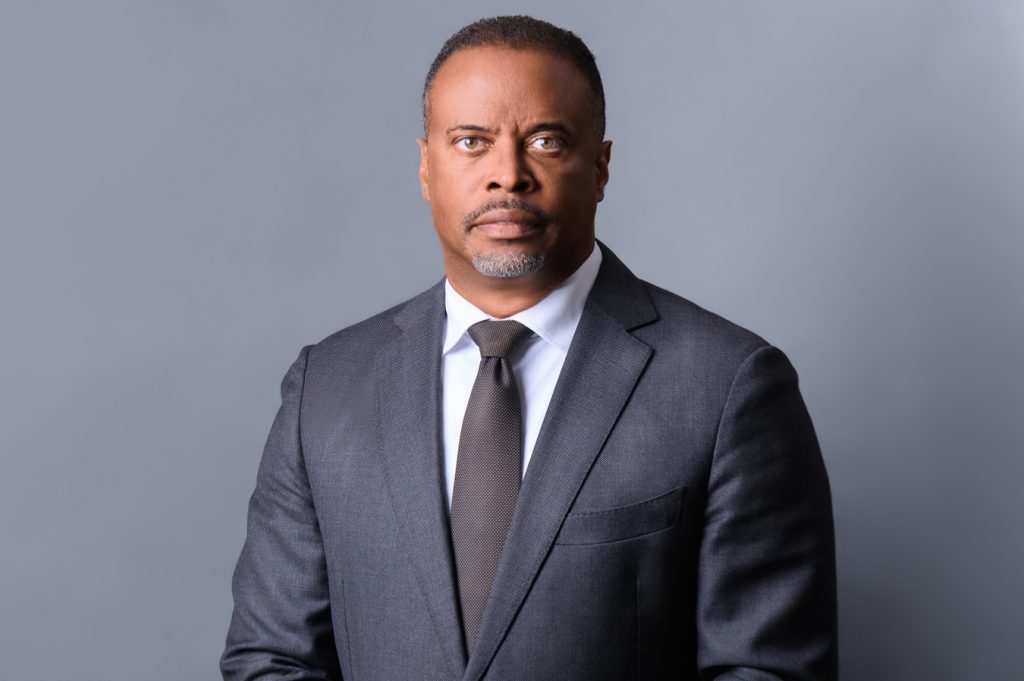
Premier of Nevis, Mark Brantley, has warned that growing geopolitical instability, economic fragmentation and technological disruption are reshaping the global financial landscape, requiring high net worth families and their advisors to rethink how private wealth is protected and managed.
Brantley delivered the remarks during the opening ceremony of the 2026 Society of Trust and Estate Practitioners Caribbean Conference, hosted by the Saint Lucia branch on May 12 at Sandals Grande Saint Lucian Spa & Beach Resort.
Addressing delegates, the Nevis premier said the era of predictable globalization and economic stability has given way to increased uncertainty driven by shifting alliances, trade disputes and security concerns.
“For much of the late 20th century, globalization and the rules-based order acted as a stabilizer,” Brantley stated.
“But today we are seeing trade fragmentation, witness the recent impact of tariffs and wars on global trade, and the cost of living, I’m sure, right here in Saint Lucia, that’s being felt,” he added.
According to Brantley, changing geopolitical realities are now directly influencing economic policy and investment decisions around the world.
“Strategic decoupling, alliances change and traditional trade partners look in other directions,” he said.
“National security, which is increasingly intertwined with economics, fear of terrorism, and sadly, a fear of immigrants. And these impact economic policy and allocation of resources,” Brantley continued.
“These factors create uncertainty, not just in markets, but in long-term capital deployment and allocation.”
The Nevis premier also highlighted the end of the prolonged period of low interest rates that dominated global finance for more than a decade.
“For over a decade, investors lived in a world of near zero interest rates and abundant liquidity. That world is gone,” he remarked.
“Higher rates now mean capital is a real cost again. Leverage behaves differently. Assets, correlation shifts. Too many portfolios are still positioned for yesterday’s regime,” he warned.
Brantley further pointed to rapid technological advancement, particularly artificial intelligence and automation, as another major force reshaping wealth creation and investment strategies.
“Technology is both a creator and a destroyer of wealth,” he said. “AI, automation, and digital assets are compressing timelines. Industries are disrupted faster. Competitive advantages decay sooner. Human capital is repriced in real time, and this magnifies both upside and downside risks.”
Against that backdrop, Brantley encouraged wealthy families and financial advisors to adopt a more strategic and resilient approach to wealth management.
“I encourage high net worth families and their advisors to think about private wealth across four core functions,” he stated. “Number one, protection. This is a non-negotiable foundation.”
According to Brantley, preserving wealth requires more than accumulation, particularly in an increasingly volatile world.
“Protection means capital preservation against inflation, legal and jurisdictional resilience, defense against catastrophic loss,” he explained. “Wealth that is not protected is not wealth. Wealth that is not protected constitutes exposure.”
Brantley also stressed that growth strategies must be carefully aligned with risk and long-term sustainability.
“Number two, growth. Growth is essential but growth is also contextual,” he said.
“Growth must respect the risk budget. It must align with time horizons, and it has to be resilient across cycles.”