

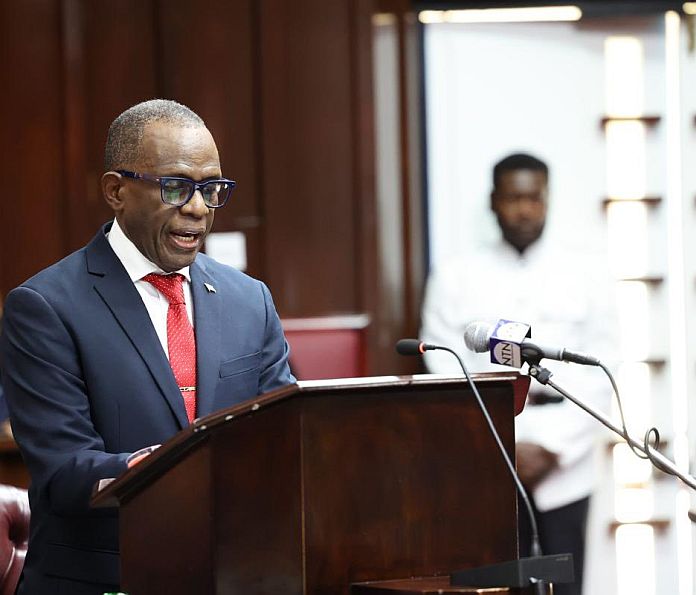
The Government of Saint Lucia has outlined an ambitious slate of education reforms for the 2026 to 2027 fiscal year, centered on widening access, strengthening quality, and easing the financial burden on students and families.
In a statement released on April 22 following the policy address of Prime Minister Philip J Pierre, the Office of the Prime Minister said the administration’s educational agenda “focuses on expanding access, improving quality across all levels of learning, and providing targeted financial support for students and specialized training programmes.”
A key pillar of the plan is early childhood education, with authorities placing renewed emphasis on foundational learning. According to the statement, this will include the establishment of “a Working Group on Universal Early Childhood Education to develop a national plan for expanding access to quality early childhood care.”
In tandem, the government intends to increase “the subvention to private early childhood centers to improve the quality of education provided at these institutions.”
At the primary and secondary levels, several initiatives are being introduced to enhance both teaching standards and student outcomes. The government confirmed that it will be having the Mathematics Master Teachers Programme to equip educators with advanced skills,” a move aimed at improving performance in a subject that has long posed challenges across the region.
Efforts to address absenteeism are also being intensified. The administration plans to strengthen “the Truancy Unit to improve school attendance through enhanced monitoring and enforcement systems,” signaling a more structured approach to ensuring students remain engaged in the education system.
Financial relief for families forms another central component of the package. The government announced that it “will provide payment of fees for five CXC subjects,” a measure expected to reduce the cost of secondary certification and broaden access to examination opportunities.
At the tertiary level, targeted investments are being directed towards both academic and vocational training. A grant of $250,000 has been allocated to the Sir Arthur Lewis Community College, specifically its Agriculture Unit, to “enhance training and innovation for future farmers.”
The initiative is intended to strengthen capacity in a sector viewed as critical to national development.
In the field of legal education, the government disclosed that it will be “providing two annual law scholarships specifically for police officers to train them as qualified prosecutors.”
In addition, authorities are “reviewing the Economic Cost Programme for law students to ensure financial support for those pursuing law degrees remains fair and accessible.”
Beyond the classroom, the administration is also seeking to create alternative pathways for youth development. The statement noted plans to expand semi-professional cricket and football leagues, describing them as mechanisms “designed to foster youth development and talent growth.”