

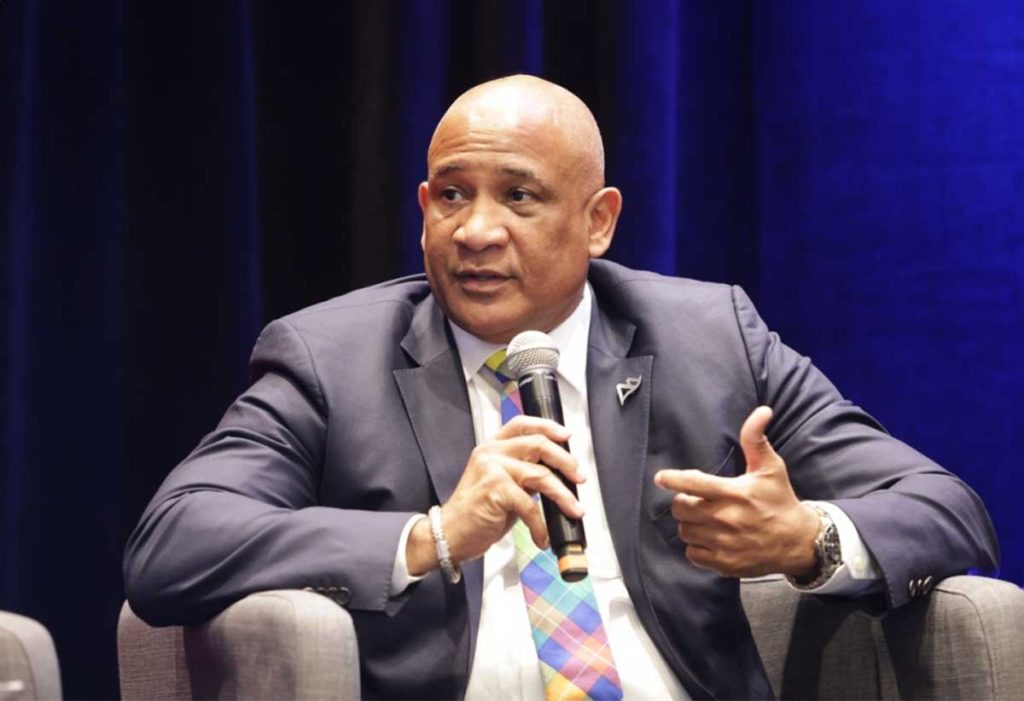
As the government intensifies efforts to create a more business-friendly environment, renewed attention is being placed on the performance of the public sector, with officials acknowledging the need to balance accountability with efficiency.
Investment Minister Ernest Hilaire says comparisons between public and private sector operations must take into account the structural differences that shape decision-making.
“In the private sector, you can make decisions on the run. If it doesn’t work, you take the fall for it,” Hilaire explained. “So, you can be more reactive and more proactive at the same time because it is your business.”
He contrasted this with the realities of public administration, where decisions are governed by established rules and oversight mechanisms.
“The public sector is different. There are laws that say what can be done and what cannot be done, and you are accountable in the system,” he said. “Even as politicians, we are accountable, so the decision-making processes are different.”
According to Hilaire, what may appear as inefficiency is often the result of necessary procedures designed to ensure transparency and fairness.
“Somebody submits a proposal in the private sector, and you can decide quickly based on your revenue,” he noted. “In the public sector, you have to review it, get approvals and follow processes. So, I am not sure anyone should immediately say this is inefficient. It is different.”
However, the minister acknowledged that improvements are needed to make government processes more responsive, particularly as the country seeks to stimulate investment and economic growth.
“The point is we want to make government more expeditious in decision-making,” Hilaire said. “Rather than take a long period to provide approval, how can we speed it up and identify where inefficiencies exist?”
He suggested that policy adjustments could help drive faster outcomes. “We can say to the private sector that if within 90 days you do not get approval, then approval is deemed granted. You can do things like that to force the system to be more efficient where inefficiencies exist,” he added.
At the same time, Hilaire stressed that some procedures cannot be bypassed due to legal requirements.
“There are certain things you have to take to Parliament for approval, and that is just it,” he said. “It is about understanding the dual processes while ensuring that the system becomes more efficient where it can.”
The renewed focus on public sector performance comes as Saint Lucia continues to pursue reforms aimed at improving the ease of doing business, with stakeholders calling for a system that is both accountable and responsive to the needs of investors and citizens alike.