

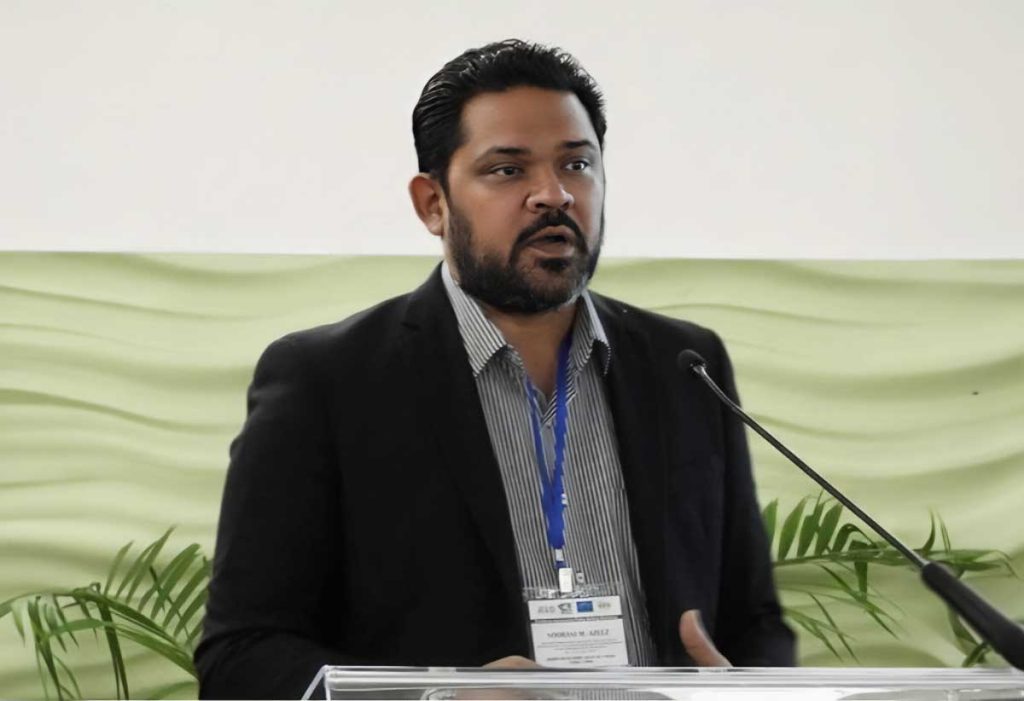
The Saint Lucia Hospitality and Tourism Association (SLHTA) is moving from strategy to action as it seeks solutions to ongoing water supply challenges affecting the tourism sector.
The association has launched a maritime procurement plan aimed at securing water shipments from neighboring islands, a move intended to stabilize the industry’s strained supply chain and reduce the operational burden on tourism operators.
Chief Executive Officer of the SLHTA said the current situation has forced water truckers to travel long distances to secure supplies, significantly increasing costs for hotels and tourism businesses.
“For a number of weeks, truckers have had to go as far south as Vieux Fort in order to get water to meet the needs of members, and that increases the cost of the water for them,” the CEO explained. “Notwithstanding, you need the water, you have to pay for the water.”
According to the association, the rising cost of water has become a major concern for businesses across the sector.
“Well, the cost of accessing the water right now for many of our members is extraordinary. The data comes in, and it’s really shocking how expensive it is,” the CEO said.
The organization is therefore examining a range of options to address the issue, including engaging overseas water barging companies to explore the feasibility of importing water by sea.
“We have, as a private sector, from our own resources, been in touch with overseas water barging companies,” the CEO revealed. “We have started exploratory conversations on what it would cost us to bring water in from neighboring islands, and we are looking at comparative costs to see which is cost-prohibitive and which are healthier or more suitable to our bottom line.”
Preliminary discussions suggest that importing water may prove to be a viable alternative to current supply arrangements.
“The information that I have suggests that it may be marginally less expensive for us to bring the water in and to truck it to our respective enterprises than the current cost of trucking water from state utilities that currently exist right now,” the CEO noted.
The SLHTA has already developed a work plan that will involve collaboration with several stakeholders responsible for water quality testing, importation logistics and transportation to hotels and tourism properties.
“We have a work plan set up that would assure us of discussions locally with various organizations,” the CEO said, adding that the process will include evaluating the quality of imported water and managing the logistics of transporting it to participating businesses.
At the same time, the association is exploring ways to reduce the tourism sector’s reliance on the national water supply.
“As a private sector, we reserve the right to explore, at our own cost, other opportunities as well,” the CEO stated.
“One of which is, can we barge water in? How frequently can we get it done? And can we avail ourselves of this in a very efficient way in order to ensure that we practice strong corporate citizenship and reduce our dependence on that state resource.”
Another strategy under consideration involves improving the efficiency of existing desalination and reverse osmosis systems at tourism properties.
“One of the other things we would like to look at is how we can get our reverse osmosis and desalination plants running at a level of efficiency that would perhaps allow us to trade internally among ourselves excess production of that water,” the CEO said.
The idea would allow properties with surplus water production to supply others facing shortages.
“So, for example, if a property is operating at a reduced occupancy level but they’ve got a desalination plant that can produce a higher volume that they’re willing to use, can we access that for use at other properties?” the CEO explained.
The SLHTA is also preparing to engage the government on potential incentives that could support long-term water security within the tourism sector.
“Incentives have to be part of that structure moving forward if we’re going to expedite that transformation within the private sector,” the CEO said.
Among the proposals being discussed are incentives to support water audits, expanded storage capacity and improved water harvesting systems at tourism properties.
“We would like to look at how we can get incentives to audit our facilities to get a better sense of water harvesting opportunities within our plants and how we can expand storage on property to allow us to harvest and purify and store that water for other uses,” the CEO added.
The association says the goal is not only to stabilize water access for tourism operators but also to reduce pressure on the national water supply, ensuring that more water remains available for communities and domestic users.