

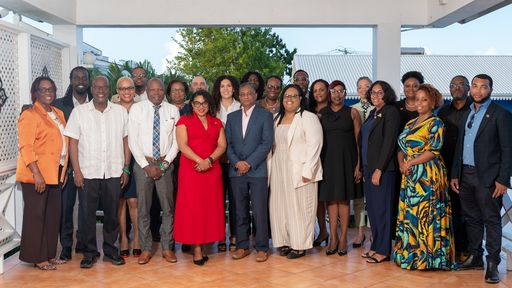
Caribbean leaders have convened in Saint Lucia amid intensifying climate pressures, working to finalize a regional roadmap for a future beyond oil and gas.
The meeting comes ahead of the upcoming global summit in Santa Marta, Colombia, where the region aims to present a unified position on climate justice and energy transition.
Central to discussions is the Fossil Fuel Treaty Initiative, which is seeking to build greater awareness and support among Caribbean governments and civil society.
Political Director of the initiative, Gillian Cooper, described the significance of the moment.
“To support a greater awareness of the Fossil Fuel Treaty Initiative’s aims, the proposal that we have on the table for Caribbean governments and civil society, but also to raise awareness of the Santa Marta Conference,” she explained. “It’s actually the first conference on transitioning from fossil fuels, and it’s an opportunity for both civil society and governments in the Caribbean to participate at the table to really talk about what their needs are for a just transition from fossil fuels.”
However, Cooper stressed that while the ambition for transition exists, financing remains a major obstacle.
“There is a massive gap in that and the financing that is required to be able to make that transition,” she said. “And that financing is difficult because our global financial architecture is really structured so that Caribbean governments find it difficult to be able to get the loans that they require, actually the grants that they require to be able to transition.”
She argued that this imbalance reflects a broader issue of climate justice, pointing to the historical responsibility of wealthier nations.
“There is actually a climate debt that global north countries have to other countries in the global south,” Cooper stated. “They have historical emissions, so the structure of the way in which our financing is shaped makes it very difficult for us to be able to access that to be able to transition.”
The urgency of reform, she noted, is compounded by the region’s vulnerability to climate shocks. Referencing recent discussions, Cooper highlighted the economic toll of extreme weather events.
“The Caribbean is highly climate vulnerable. We’ve seen, you know, we had today the discussions about the impacts of Hurricane Melissa,” she said. “The cost of that was about over 40 percent of Jamaica’s GDP to be able to pay for the impacts of that.”
Such disasters, she warned, deepen financial strain and hinder progress toward sustainable energy goals.
“That again is putting us in a very difficult position to be able to transition because we’re just adding to the debts and the loans and so forth,” Cooper added. “So, there needs to be a real restructuring and rethinking about how that is structured to support more global south countries to be able to make the transition that they desperately want and need.”
As deliberations continue in Saint Lucia, regional leaders are seeking to consolidate their demands into a cohesive strategy, one that calls not only for climate ambition but also for equitable financing mechanisms that reflect the realities of small island developing states.