
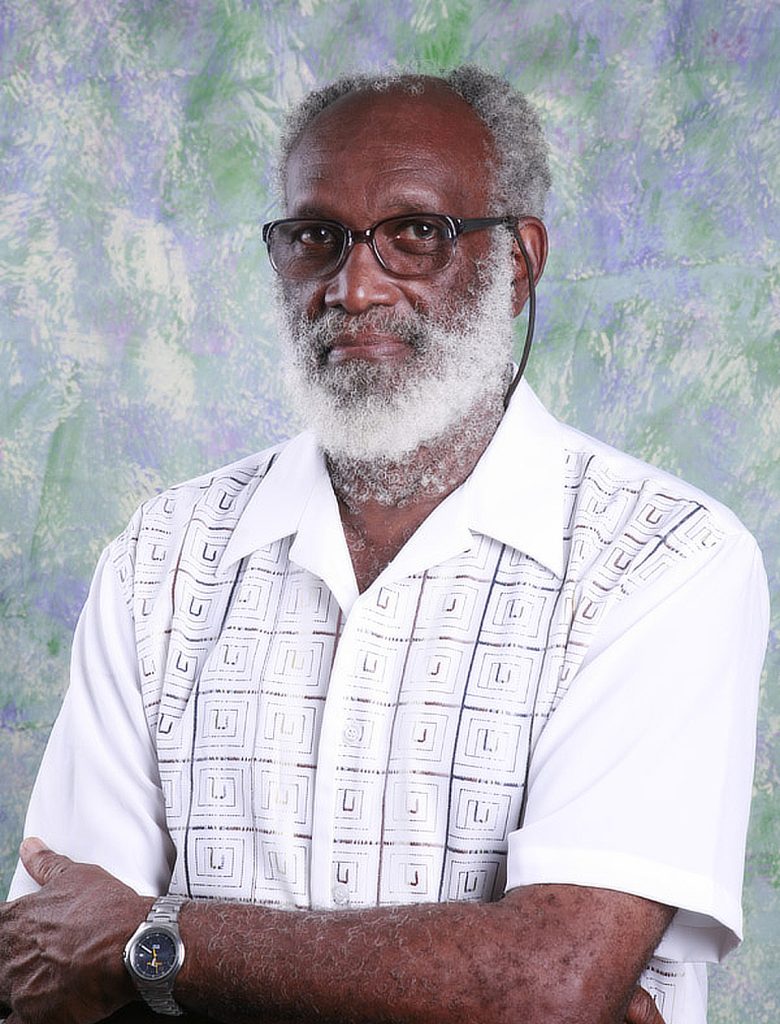
Cultural leaders, educators and government officials gathered at the National Cultural Centre on January 6 to pay tribute to the life and legacy of Dr. Gregor Ernest Williams, a distinguished Saint Lucian scholar, archaeologist, historian and activist who passed away in December 2025.
The event, titled “Vini Sélébwé”, celebrated his enduring contributions to Saint Lucian history, education, heritage preservation and regional cultural advocacy.
Tourism and Culture Minister Dr Ernest Hilaire described Dr Williams as a visionary whose work prefigured modern approaches to heritage and cultural tourism.
“These days when we speak in tourism about selling authentic experiences and immersing people in the history of the countries and the destinations that they visit, this is like, Gregor, years before we involved in heritage tourism, training tour guides in Saint Lucia, and really speaking that the best way for us to share our country is by an authenticity of who we are as a people,” Dr Hilaire said, underscoring how Williams’ efforts helped lay foundations for sharing Saint Lucia’s rich cultural narratives with visitors and locals alike.
Marcia Symphorien, Secretary General of the Saint Lucia Commission for UNESCO, emphasised Dr Williams’ role as a bridge between generations. She highlighted his dedication to engaging young people with their own history and cultural heritage.
“He willingly shared his vast knowledge and expertise with students island-wide, visiting schools, facilitating activities, and actively engaging young people in meaningful learning experiences centred on cultural heritage and history,” Symphorien said.
She continued: “In that regard, he served as a bridge between generations, reminding us that culture thrives when it is nurtured, protected, and most importantly, when it is shared.”
The twin pillars of Williams’ work were history and archaeology, including significant contributions to the understanding of the plantation era and Caribbean historical connections.
Research shows that he contributed to early efforts to document archaeological insights in Saint Lucia, including plantation systems and their material culture, which have informed both scholarly and public appreciation of the island’s past.
Historian and journalist Earl Bousquet reflected on Williams’ impact in wider regional contexts.
“That was where we were able to share with delegates from Latin America and the Caribbean, Africa, Europe, worldwide,” Bousquet said, referring to Williams’ work highlighting the contributions of figures such as Jean-Baptiste Bideau to Venezuela’s independence struggle.
Williams co-authored significant historical work on this topic, reinforcing Saint Lucia’s links to broader Caribbean and Latin American liberation histories.
Alumnus Wilson Jn Baptiste of Vieux Fort Senior Secondary School recalled Williams’ influence on young minds during his weekly engagements with students.
“When we discovered his radicalisation on Monday mornings, there was a group of us who were very close to him, and he was inculcating the values of radicalisation in us,” he said, reflecting on Williams’ energetic and immersive teaching style.
He praised Williams’ humility and mentorship, describing him as someone who “thought he’d raised us as his children” and expressing gratitude for the support and encouragement he provided.
The “Vini Sélébwé” tribute not only honoured Dr Williams’ scholarly achievements but also celebrated his deep commitment to education, culture and the empowerment of future generations.