The National Skills Development Centre is setting an ambitious agenda for 2026, with sweeping reforms aimed at expanding access to technical training and modernising how skills education is delivered in Saint Lucia.
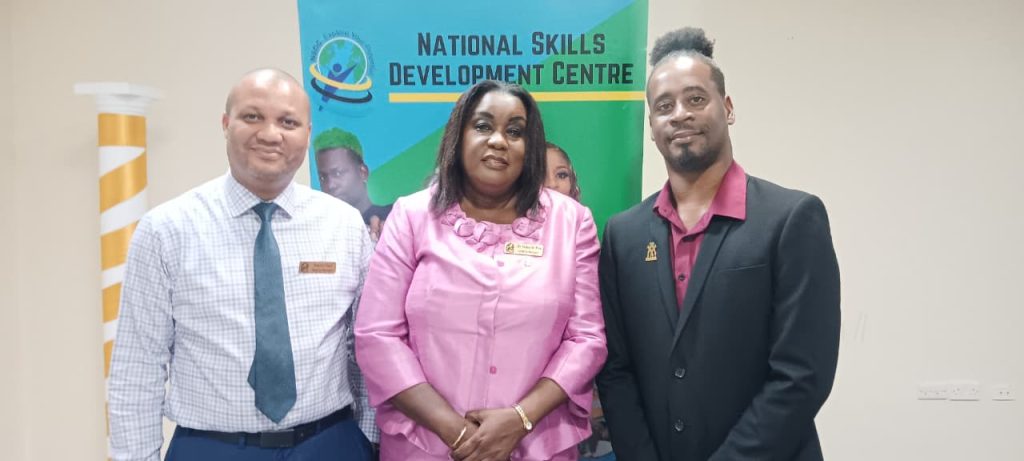
Speaking with the News team, General Manager of the NSDC, Dr Selma St. Prix, outlined a major institutional shift that will redefine the organisation’s role while preserving its longstanding commitment to vulnerable and at-risk youth.
“So we’re looking forward to a lot of things in 2026,” Dr St. Prix said. “One of the greatest things we’re looking forward to is collegiating the NSDC. And what I mean is instead of National Skills Development Centre, it will be National Skills Development College.”
She acknowledged concerns that the transition could affect the centre’s core mandate of supporting at-risk youth but stressed that this group would remain a priority.
“I know a lot of people are worried about, okay, so what about your at-risk youth. Well, our at-risk youth will not be neglected,” she said. “We will be ensuring that they come under our corporate social responsibility arm.”
According to Dr St. Prix, targeted support will continue through scholarships, sponsorships and wraparound services.
“There still will be assistance, and that’s where our scholarships will be,” she explained.
“The sponsorships are for young people who really cannot afford; we really cannot neglect them. And all the other things, our counselling and our life skills, transversal skills, all of the things needed for them to be successful in the workforce, that will not be neglected.”
A key component of the reform agenda is the introduction of a semester-based system, which is expected to improve continuity and progression for students.
“We want to have semesters,” Dr St. Prix said. “Because what happens at the National Skills Development Centre is that we have projects and we are project-based.”
She explained that under the current model, programmes often depend on external funding cycles.
“When you write a proposal, then you get that proposal, you win a winning proposal, then you get the money to start off these courses,” she said. “So people sometimes wait for that to happen. But we want it to happen seamlessly and have a continuity kind of thing.”
The proposed structure is also designed to strengthen pathways into tertiary education.
“We want progression for us from the NSDC into the other college, which is Sir Arthur Lewis Community College,” Dr St. Prix noted. “Some of them will graduate straight from just NSDC alone because we have a very strong relationship with Sir Arthur Lewis Community College. We also are going to build our relationship further with Sir Arthur Lewis Community College.”
Technology-driven learning will also play a central role in the centre’s evolution, particularly through the expanded use of virtual reality.
“What we want to do is have the virtual reality which we introduced last year be continuous,” Dr St. Prix said. “So it’s like gaming. You know the guys like to play their games.”
She added that this approach responds to different learning styles and modern realities.
“A lot of that will be incorporated into their courses…because sometimes they cannot sit in class as long as the girls can,” she explained. “When they use these aspects, the courses happen faster. You could do it from anywhere. You could use your phone and all of that.”
Dr St. Prix said the integration of technology is about meeting young people where they are.
“Technology, the boys are really big on technology,” she noted. “So all of these things we’re going to incorporate this coming year to make things happen for our young people.”
The proposed changes signal a significant shift in how technical and vocational education will be structured in Saint Lucia, as the NSDC positions itself to play a broader and more integrated role in national development while maintaining its social mission.