

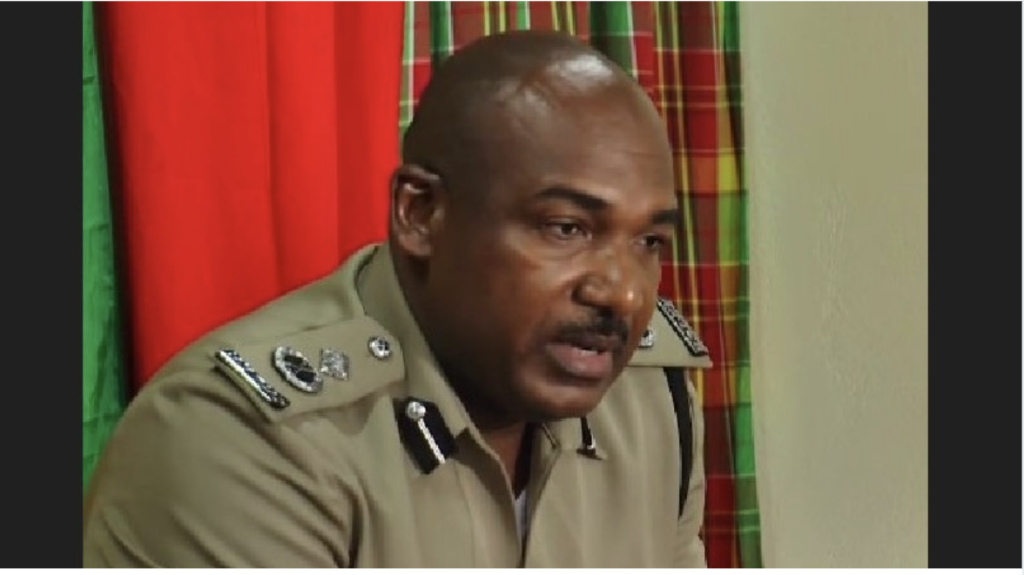
The Royal Saint Lucia Police Force is encouraging the public to continue providing information through its Crime Hotline 555 and mobile application, saying reports from members of the public are helping investigators in homicide and firearms cases.
Deputy Commissioner of Police Wayne Charlery said the response to the police’s information-gathering channels suggests that Saint Lucians are willing to assist law enforcement when they have information that could help an investigation.
“What we’re experiencing does not support that persons are reluctant to, maybe there are some persons, but given the number of firearms confiscated, the homicides that have been solved, and you know, continuing investigations into some serious matters where persons are providing the support and help, I believe that, you know, it’s, we’re not in a bad state when it comes to persons assisting us in reporting, whether information intelligence or evidence,” Charlery said.
The police have previously encouraged residents to report suspicious activity and provide information that could assist investigations, with the 555 hotline and mobile application offering avenues for members of the public to make reports.
Charlery said the police’s record in solving cases should give the public confidence that information provided to investigators can make a difference.
“I don’t want to tell them something. They need to look at our work,” he said.
“The fact that in a mid-year, we’ve been able to solve 20 homicides. One of those would be from 2025.”
He said the police’s performance should help reassure members of the public that their reports are worthwhile.
“So I think the work of the police, as successful as it is or not, should provide that sort of confidence for persons to report matters to the police,” Charlery said.
The Deputy Commissioner pointed to firearm seizures and the resolution of homicide cases as further evidence of the value of public assistance.
Charlery also acknowledged that information supplied to police does not always accurately reflect what investigators eventually establish.
“Some callers, some reporters may be mistaken in terms of what they report,” he said.
He explained that investigators may find circumstances that provide some basis for what a caller believed had happened, even when the original report does not accurately describe the incident.
“Having done the investigation, the circumstances would certainly mirror what the individual believed,” Charlery said.
However, he noted that a person’s perception at the time of making a report can be influenced by several factors.
“But again, you would understand that it is about perception and the reporter’s perception at the time, given their emotional state and other things would create certain suggestions to them,” he said.
Charlery said investigators have encountered situations where the information provided did not correspond with the eventual seriousness of the incident.
“So I can speak to that, where what they thought or they had reported, although, you know, it wasn’t, it could have, we could have understood why the report was made, but it did not really match the gravity of the incident that they would be reporting,” he said.
Despite the possibility of inaccurate or incomplete reports, police continue to rely on public cooperation as an important part of crime detection and prevention.
Charlery’s appeal comes as the force continues efforts to suppress violent crime and illegal firearms, with authorities urging residents to share information they believe could assist an investigation, even when they are uncertain about its significance.