

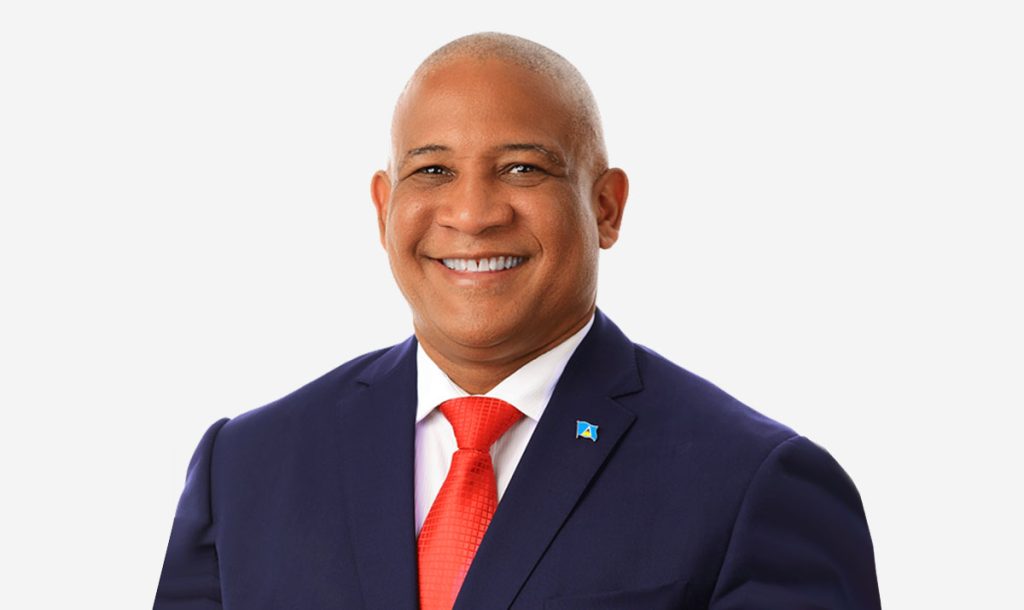
Culture and Creative Industries Minister Dr Ernest Hilaire has defended the overall success of Saint Lucia Carnival 2026, arguing that isolated incidents during the festivities should not define the experience of thousands of revelers who participated responsibly.
Speaking following this year’s celebrations, Hilaire acknowledged concerns about incidents involving persons entering carnival bands without authorization and inappropriate behaviour but maintained that these issues should be addressed through education and enforcement rather than being used to characterize the entire festival.
“One incident can become the definition of what the experience is of everybody. Well, I think it’s a little unfair, but it’s just a reflection of modern-day society,” Hilaire said. “So it is something we have to continue to work on.”
The minister expressed particular concern about individuals entering organized carnival bands without paying to participate, stressing that such behaviour undermines the experience of paying revelers.
“I believe if you spend so much money to get a costume for an experience on the road, persons who do not spend such money, they’re not part of the band, have no place in the band,” he said.
Hilaire called for greater public education and stronger enforcement to discourage the practice.
“We have to continue to educate, first of all, to tell individuals, you do not have to invade the bands, that it is a crime, you can be arrested, you can be charged, and to really enforce it,” he said.
He added that ensuring visitors feel welcome is essential to preserving Saint Lucia’s reputation as a carnival destination.
“Because we are inviting people to come to share the carnival with us, and we really need to take into account how we treat people, how we welcome people, and the hospitality that we show.”
While acknowledging that alcohol consumption can contribute to inappropriate behaviour, Hilaire said personal responsibility remains essential.
“Of course, it becomes more difficult because alcohol is involved. People are drinking, their behavior is a little less constrained, and therefore it becomes even more challenging for us,” he said.
“But we have to work on it, and we have to make sure people understand they should not be invading bands. And secondly, that is just not accepted, and that there will be consequences when people behave in such a manner.”
The minister also rejected claims that Carnival itself encourages reckless or indecent conduct.
“Carnival is not an excuse for licentious behavior or lewd behavior or anything like that,” Hilaire said.
“It’s not an excuse to overdrink and to do too much and cling because it’s carnival. You know, you must drink ceaselessly or you must behave ruthlessly. That’s not what it’s about.”
Instead, he described the festival as an expression of culture and identity.
“Carnival is a celebration of life, of freedom, of who we are. And of course, drinking and feting is part of it. But we must always be responsible.”
“So I don’t think it’s out of control. I think it is part of it. We, as much as possible, should eradicate it. But we want people to be responsible in whatever you do.”
Addressing concerns about public behaviour during the festival, Hilaire said there are occasions when individuals clearly cross acceptable boundaries and that such cases should be dealt with through the justice system.
“I don’t want to give you what may be examples of going extreme, but I think we all know, as a people, we all know when somebody has really crossed that line,” he said.
When asked how such behaviour should be addressed, the minister replied, “The police and them have to act and arrest the persons who are doing it. It’s against the law.”
He noted that changing social attitudes also influence public perceptions of acceptable behaviour.
“The court will then interpret whether it was actually, you know, too much,” Hilaire said.
“And society changes, too. I mean, at one time there was a lot of conservatism in how people express themselves and the outfits they have on the road.”
“We’ve become a little more liberal and tolerant. And maybe as time goes by and the Gen Z’s now become more mainstream, a lot more things will be acceptable. I mean, that’s just the reality of societal change.”