

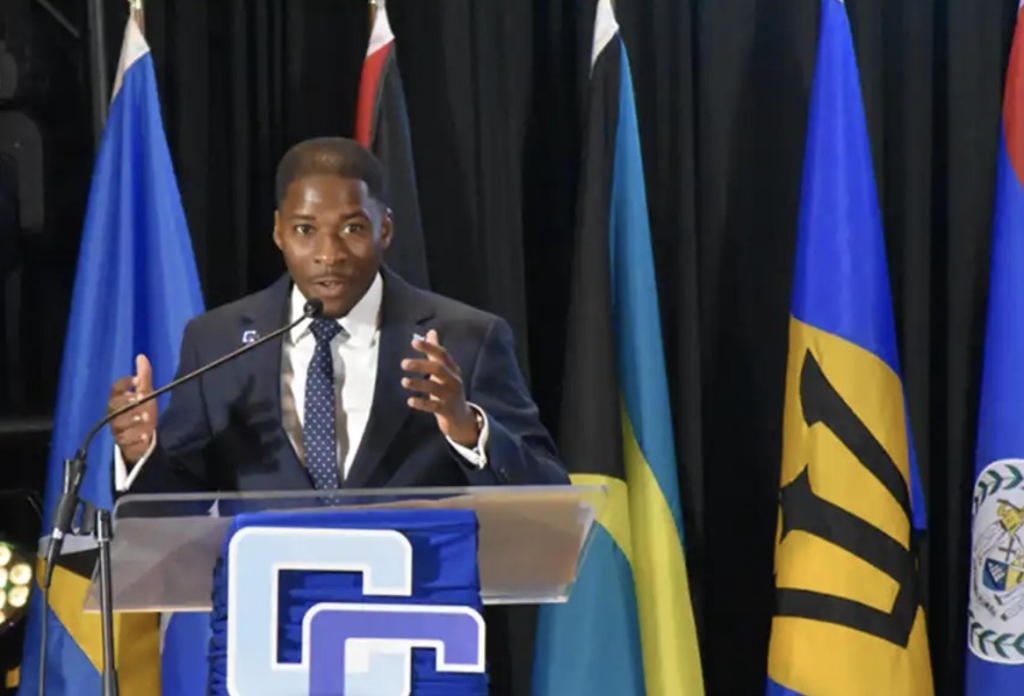
Saint Lucian Rhodes Scholar Rahym Augustin-Joseph is calling on Caribbean leaders and citizens to adopt a more ambitious vision for the region, arguing that many of its greatest challenges can only be solved through stronger regional cooperation and innovative thinking.
Speaking on the future of Caribbean development during Stephen Fevriere’s 1461 Podcast last week, Augustin-Joseph said the region must recognize that small island states cannot tackle every issue independently and should instead build on each other’s strengths.
“We have to be able to see that some of our collective action problems can only be solved together,” he said. “There is no world in which a small country within the region can have the answers to everything.”
He pointed to healthcare as one area where greater collaboration could produce better outcomes for Caribbean citizens.
“Let’s take health, for example. I don’t know that we, each of these countries, have the resources to be able to provide world-class health for every single possible issue,” Augustin-Joseph said.
“But Barbados is 30 minutes away, Dominica probably 15 or 20. There has to be a world in which we can create centers of excellence across the region in very select, distinct matters.”
He suggested that countries should specialize in areas where they already possess expertise, while making those resources available to the wider Caribbean.
“Whether it is that Jamaica then becomes the center of excellence for athletics, there is no problem in which we ensure that we have some level of training here, but also within the regional framework, understand that other countries have skill sets that we can benefit from as well,” he said.
Beyond regional integration, Augustin-Joseph expressed concern that Caribbean societies are too focused on immediate challenges and are failing to develop a long-term vision.
“I worry as well that we have, as you said, been captured by the present moment, fixated on it almost, that we don’t think deeper beyond the current surface and ask ourselves, but what is the idea and the vision that we want to be able to have for the future?” he said.
He argued that meaningful progress requires leaders who are prepared to challenge existing systems.
“How is it that we can marshal a new type of thinking and thought leadership that allows us to say, well, this isn’t working?” he asked.
Addressing the issue of reparations, Augustin-Joseph maintained that historical injustices continue to have lasting consequences and that reparatory measures remain an important part of addressing those inequalities.
“They all recognize that there is a debt to be paid,” he said.
“I still submit that the resources can play a major role in being able to rebalance some of the injustices within the current society that we face and that we see going across generations.”
At the same time, he cautioned that Caribbean societies must also confront injustices that arise from within their own communities.
“It does not also escape my mind also that we also have at times engaged in injustices within a society that may not be the cause of anybody else,” Augustin-Joseph said.
“These two things are not mutually exclusive. And therefore, one does not trump the other.”
His remarks underscored the need for a dual approach to regional development, one that seeks both historical justice and meaningful internal reform while fostering greater cooperation among Caribbean nations.