

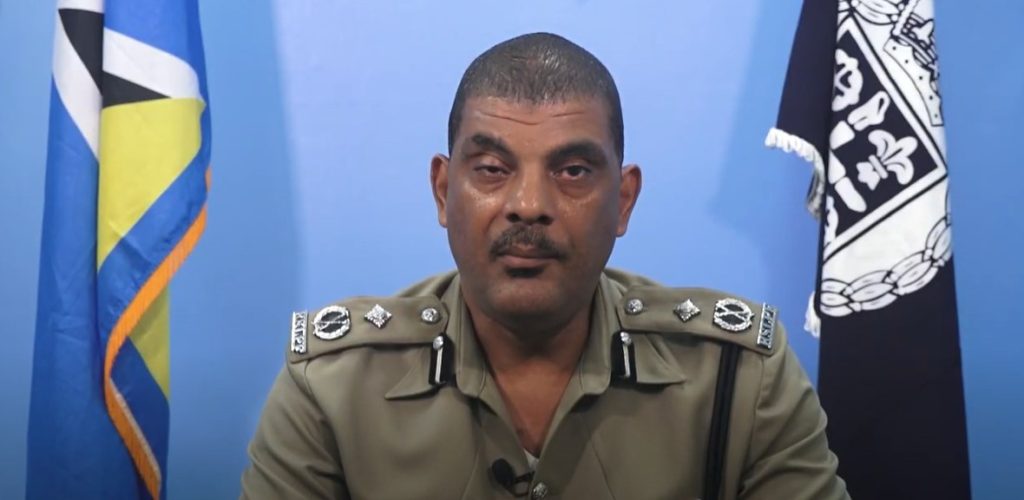
The Royal Saint Lucia Police Force is renewing its appeal for members of the public to come forward with information that could help solve the island’s growing number of unsolved homicides, warning that fear and silence are allowing violent criminals to operate with impunity.
In a media engagement, Assistant Commissioner of Police Luke Defreitas said 23 homicide investigations remain unsolved this year, largely because witnesses with vital information are reluctant to cooperate with investigators due to fears of retaliation.
“Currently, 23 of our homicide cases remain unsolved, primarily or partly due to the fact that individuals and witnesses with critical information are terrified of reprisal,” Defreitas said.
He noted that every citizen shares the same desire for safe communities where families can live without fear.
“We all share a common desire. We want to feel safe in our homes. We want our children to play outside without fear, and we want to sleep at night without the haunting sound of gunfire or the insecurity of the unknown,” he said. “But if we have to be completely honest with ourselves, we have to admit a very uncomfortable truth. Our streets are not just being ruled by the guns of the criminals, they are being ruled by our very own silence.”
Defreitas argued that refusing to report crimes only strengthens the influence of criminals, creating an environment in which offenders believe they can act without consequence.
“Every time we witness a crime and look the other way, every time we say it’s none of our business, we are sending a loud clear message to the criminals. We are terrified of you, and you are in control,” he said.
“Think about the power dynamic we have created. By openly broadcasting our fear, by loudly proclaiming that we will never speak up because we dread their reprisals, we have given criminals a free reign. We have told them exactly what they need to do to keep us compliant.”
While acknowledging that concerns about witness protection and public confidence in law enforcement are legitimate, Defreitas cautioned against allowing distrust of the police to overshadow the need to confront those responsible for serious crimes.
“But we justify the silence. In many instances we have a ready-made excuse, and it is one that we repeat often. We say, ‘I can’t trust the police. If I talk, the police will leak my name. The police will set me up,’” he said.
“It is completely valid to demand higher standards, better protection for informants and absolute accountability from law enforcement. But when we spend all our energy loudly condemning the police as the primary threat, we commit a dangerous error in judgment.”
He warned that such attitudes risk shifting attention away from those committing violent offences.
“We paint the police as the ultimate enemy, while the actual perpetrator, the thief, the rapist, the murderer standing on the corner gets a free pass.”
The senior police officer urged members of the public to work alongside law enforcement, stressing that greater cooperation is essential if investigators are to bring offenders to justice and improve public safety across the island.