
Sea moss farming in southern Saint Lucia is set to benefit from a targeted intervention aimed at improving livelihoods, restoring marine ecosystems, and strengthening coastal resilience, through a partnership between the Saint Lucia National Conservation Fund (SLUNCF) and the Department of Fisheries.
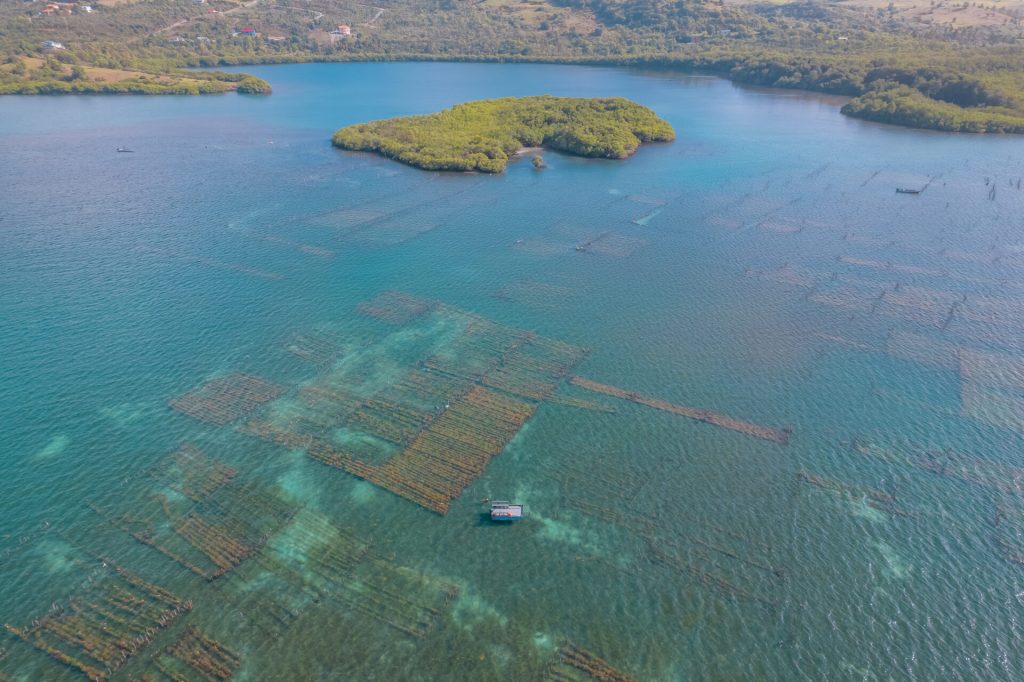
The initiative focuses on supporting sea moss farmers in Savannes Bay, Vieux Fort while introducing better spatial planning measures to reduce user conflicts and enhance sustainable production.
Chief Executive Officer of the Saint Lucia National Conservation Fund, Craig Henry, speaking to the media this week, said the project is designed to improve coordination among farmers and optimize the use of coastal space.
“We’ve been working with a number of Seamoss farmers in the area to bring some understanding as to what are some of the resources that are available to them,” Henry explained.
He added that the initiative also addresses broader planning and zoning concerns within the bay.
“What are some of the plans in terms of addressing the use of the space in terms of zonation and possibly looking at suitable sites that would allow for cultivation but would also lessen the incidence of user conflict among the various users within the area,” he said.
Sea moss farmer Petula Joseph welcomed the continued development of the sector, describing it as both a cultural and economic opportunity for communities.
“Seamlessly sampling is very natural and it’s a very good thing for our island,” Joseph said.
She emphasized the importance of passing on agricultural knowledge to younger generations, stating, “it’s good for us to just continue doing that kind of work to help out the young people out there, the children out there, to let them know that we have something capable in Saint Lucia that they will need as well. So that’s why I’m a farmer.”
Head of the Agricultural Unit at the Department of Fisheries, Vaughn Serieux, highlighted the environmental and navigational concerns linked to traditional farming methods currently in use.
“You saw during the tour a lot of the farming here uses the traditional method what we call anchored monoline, so two sticks with a line,” Serieux explained.
He noted that these materials often come from coastal vegetation and can create long-term issues if not properly managed.
“Each of these sticks would represent a tree that has to be cut from the coastal forest and when these farms are abandoned the trees would, the sticks sorry, would decompose and would pose a hazard for marine traffic as well as the seamless farmers themselves,” he said.
Serieux added that the project will help address these challenges directly. “So the project would be removing these sticks,” he stated.
The initiative is expected to improve the sustainability of sea moss farming operations while reducing environmental risks and promoting safer use of coastal waters in southern Saint Lucia.