

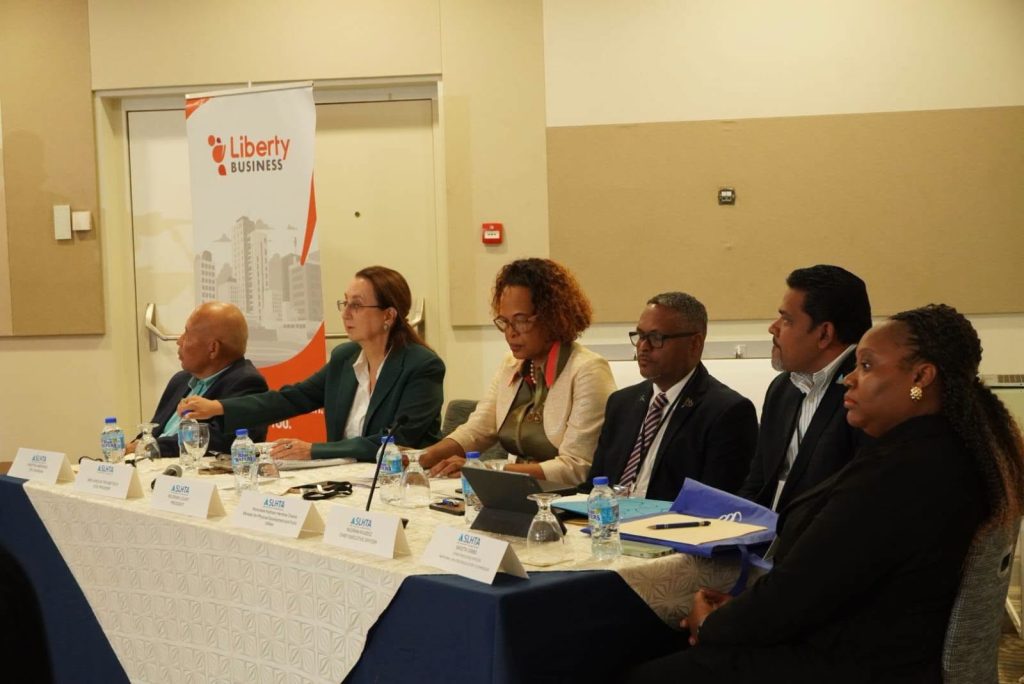
The Saint Lucia Hospitality and Tourism Association (SLHTA) has underscored the critical link between reliable utility services and the continued success of the island’s tourism sector, as industry leaders and government officials called for greater collaboration and long-term planning to address mounting challenges.
The issue featured prominently during the SLHTA’s Annual General Meeting on June 17, where stakeholders discussed the growing demands being placed on water, energy and other essential services by both tourism expansion and the effects of climate change.
SLHTA President Irwin Louisy said the recent challenges surrounding water supply demonstrated the importance of coordinated action between the public and private sectors.
“Over the past year, water security became one of the clearest examples of why collaboration is no longer optional,” Louisy said.
He noted that as drought conditions worsened and pressure on the national water network increased, the association moved beyond simply raising concerns and instead worked directly with key stakeholders to seek solutions.
“As dry conditions intensified and pressure on the national water supply increased, the SLHTA did not simply raise concerns, we engaged,” she said.
Louisy explained that the association partnered with government agencies, utility providers and private sector organizations to shift the focus from emergency response to long-term planning.
“We worked alongside the Government of Saint Lucia, WASCO, relevant ministries, private sector partners and our members to help move the conversation from immediate crisis response to long-term resilience,” she stated.
Minister responsible for Public Utilities, Keithson Charles, acknowledged the significant challenges posed by recent water shortages and admitted that both residents and businesses had felt the effects.
“I will not stand here and pretend the water situation has been easy. It has not,” Charles said.
He recognized the direct impact utility disruptions have had on tourism operators.
“You continue to experience the dry season disruptions firsthand. Your teams feel it, your guests notice it, and your bottom lines are affected,” he told stakeholders.
The minister said the concerns raised by the tourism sector had been heard at the highest levels of government.
“We heard you. The Prime Minister heard you,” Charles said.
He pointed to a high-level meeting held in March between government officials and tourism representatives as evidence of a commitment to joint problem-solving.
“That is why in March we convened that high-level meeting and sat across the table from your representatives, not to talk at you, but to collaborate with you,” he said.
“Out of that meeting, we committed ourselves to working together, public and private sector, with clear priority actions.”
Chief Executive Officer of the National Utilities Regulatory Commission (NURC), Skeeta Gibbs, stressed that the sustainability of utility services depends on ensuring that providers have the financial resources necessary to maintain and improve infrastructure.
“Utility service providers must have sufficient revenue to invest in infrastructure maintenance, upgrades and resilience, as well as technological advancement and long-term expansion,” Gibbs said.
She warned that without financial viability, utility companies would struggle to maintain the quality of services required by both residents and businesses.
“If utilities are not financially viable, they cannot sustain the provision of quality utility services,” she stated.
At the same time, Gibbs emphasized the need for strategic planning and regulatory oversight to ensure that infrastructure development keeps pace with demand.
“However, the utilities must engage in long-term planning to ensure that development is strategic rather than reactive,” she said.
She added that protecting consumers remains a core responsibility of the regulator.
“Moreover, the regulator must ensure that consumers are protected to maintain public confidence, trust and transparency,” Gibbs noted.
The discussions at the annual meeting highlighted a growing consensus among government, regulators and the tourism sector that strengthening utility resilience will be essential to supporting future economic growth and safeguarding Saint Lucia’s competitiveness as a tourism destination.