

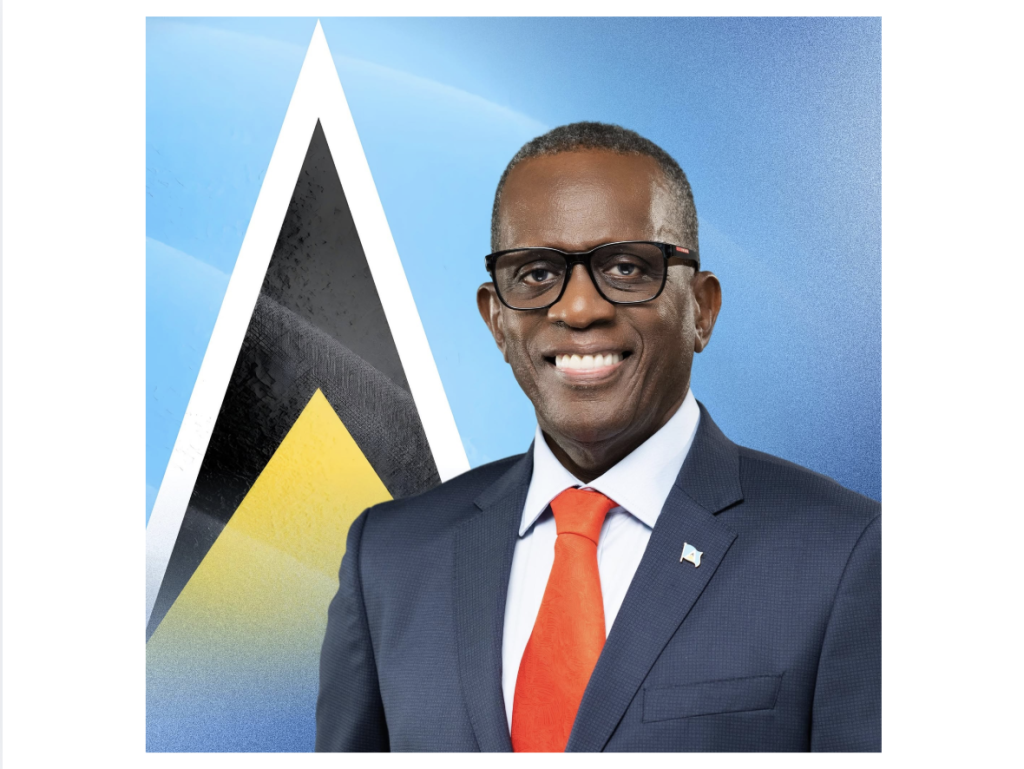
Saint Lucia is preparing to assume regional leadership at what Prime Minister Philip J. Pierre has described as a “pivotal moment” for the Caribbean Community, with a renewed emphasis on delivering practical outcomes for citizens across member states.
The country will host the 51st Regular Meeting of the Conference of Heads of Government of CARICOM from July 5 to July 8, 2026, with the opening ceremony scheduled for July 5 at the Sandals Grande hotel.
Saint Lucia will formally assume the CARICOM chairmanship on July 1, 2026, succeeding Prime Minister Dr Terrance Drew of St Kitts and Nevis.
“Today marks an important milestone for Saint Lucia and an important moment for the Caribbean community as we officially launch the 51st regular meeting of the Conference of Heads of Government of CARICOM,” Prime Minister Pierre said during a June 15 press conference.
He noted that Saint Lucia will serve as chair for a six-month period from July 1 to December 31, 2026, describing the transition as part of CARICOM’s established tradition of shared leadership.
“This orderly rotation of leadership reflects one of the enduring strengths of our community, shared responsibility, continuity, and the collective commitment of member states to advance the regional agenda in service of the Caribbean people,” he stated.
Pierre said Saint Lucia assumes the role at a time of global uncertainty, but also regional opportunity, as governments seek to adapt to what he described as “profound and complex change.”
“Our theme for this meeting, CARICOM, From Resilience to Renewal in a Changing World, captures both the reality of our circumstances and the ambition of our response,” he said.
He reflected on the Caribbean’s historical trajectory, pointing to the region’s ability to overcome adversity and build independent states.
“The Caribbean people have always been resilient,” Pierre said. “Our history tells a story of endurance, of societies that emerged from slavery and colonialism, overcame economic vulnerability, and built independent nations guided by hope, determination, and unity.”
He outlined what he sees as a necessary next phase for the region, centered on “renewal” across multiple sectors.
“Renewal of our economies, renewal of our regional cooperation, renewal of our institutions, renewal of opportunity for our people, and renewal of confidence in our collective ability to shape our own future,” he said.
The Prime Minister reaffirmed the founding principles of CARICOM, stressing that regional unity remains essential to addressing shared challenges.
“CARICOM was founded on the belief that our small states could achieve far more together than we could ever accomplish alone,” he said. “That principle remains as relevant today as it was at the birth of our community.”
He highlighted the work of regional institutions in supporting member states across key sectors, including health, education, security, disaster preparedness, and sustainable development.
“That spirit of cooperation continues to find expression through the work of CARICOM’s institutions and agencies,” Pierre noted. “Their work demonstrates the practical value of regional integration and the benefits of collective action.”
Looking ahead to Saint Lucia’s chairmanship, he stressed that the focus will be on tangible outcomes for citizens rather than abstract policy discussions.
“During Saint Lucia’s chairmanship, our focus will be guided by a simple but urgent principle. CARICOM must deliver results that our people can see and feel in their everyday lives,” he said.
He added that integration must move beyond formal meetings and official documents.
“Regional integration must not be something discussed only in conference rooms or reflected solely in communiqués. It must translate into meaningful improvements in the lives of Caribbean people,” Pierre stated.
Over the six-month chairmanship, Saint Lucia will work alongside regional partners to advance several priorities, including climate resilience, regional security, economic cooperation, and food security.
“Over the next six months, Saint Lucia will work with our regional partners to strengthen Caribbean unity, advance climate resilience and climate justice, improve regional security, deepen economic cooperation, expand food and nutrition security, and create greater opportunities for our people,” he said.
The programme will also include a Heads of Government retreat on July 6, which Pierre described as a critical space for candid dialogue among regional leaders.
“On Monday, July 6, heads of governments or their representatives will participate in the Heads’ Retreat, an important opportunity for frank discussion, reflection, and consensus building among regional leaders,” he said.
He added that the structure of the conference has been designed to encourage meaningful engagement.
“This year’s program for the conference has been intentionally designed to create a space for leaders or their representatives to engage directly with one another, exchange perspectives on key regional issues, and strengthen collaboration reflecting both the business of regional governance and the spirit of Caribbean unity,” Pierre stated.