
Questions surrounding the enforcement of vehicle tint regulations have intensified public discussion on equality before the law, following concerns that some vehicles, including those linked to government entities, may be operating outside prescribed legal limits.
The matter was raised during a recent police press briefing, prompting senior law enforcement officials to reiterate that traffic laws are applied uniformly across all categories of motorists, regardless of status or institutional affiliation.
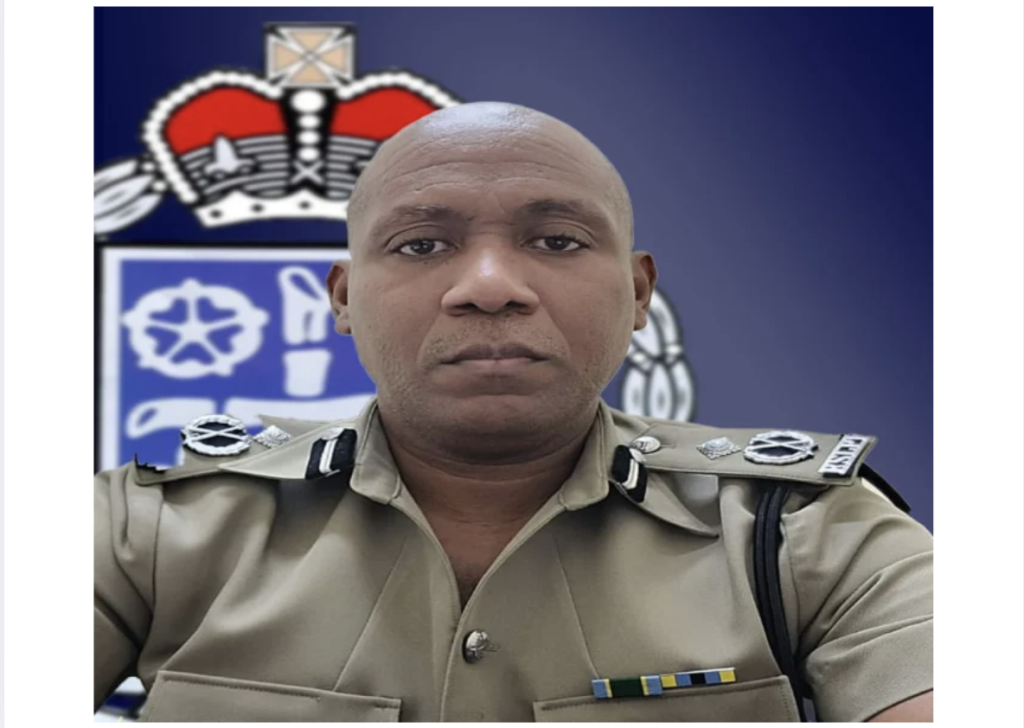
Superintendent of Police Troy Lamontagne, who heads the Department of Road Safety and Traffic Investigations, pointed to the legal framework governing vehicle tint and stressed that the provisions are binding on all road users.
“Under the driving code of Saint Lucia, which is a subsidiary law to the Motor Vehicles and Road Traffic Act, it does make create an offense for tint exceeding eight inches from the top front windscreen of the motor vehicle,” Lamontagne explained.
He further emphasized that enforcement is carried out consistently during routine road safety operations.
“The law applies to all road users, whether it be a government or a private vehicle, and it’s very evident that during our road safety operations, traffic checks and otherwise, that motor vehicles that are engaged, or drivers, sorry, who are engaged by police officers, where tint is in excess of the eight inches, the police officers do exercise the powers under the law.”
Lamontagne outlined the enforcement options available to officers, noting that discretion is exercised within the parameters of the legislation.
“One of the powers would be for the issuance of a ticket,” he said. “One of the powers, which is a discretionary power, is for the issuance of a warning notice where drivers are asked to remove the tint, well informed of the offense that they are committing, and they’re asked to remove the tint without a ticket being issued.”
Addressing concerns of inconsistency or preferential treatment, Lamontagne rejected any suggestion that enforcement is uneven.
“There is no unbalanced action on the part of the police with regard to the enforcement of the Road Motor Vehicles and Road Traffic Act,” he stated.
He added that challenges in the wider enforcement process extend beyond police operations alone and involve broader institutional procedures.
“There are subsidiary issues with regard to when tickets are issued, with regard to what the next stages are and this is not something that resides within the Royal Sandwicher Police Force,” he said.
Lamontagne further noted that the police service continues to engage relevant stakeholders in an effort to strengthen compliance and ensure consistency throughout the enforcement chain.
“We continue to work with stakeholders to try to address these issues to ensure that the law is enforced not just on the police end but going all the way through its execution within the courts of Saint Lucia.”
The Royal Saint Lucia Police Force maintains that its road safety operations are guided by statutory authority and that all motorists are expected to comply with established regulations, irrespective of vehicle ownership or affiliation.