

The Nutrition Unit within the Ministry of Health, Wellness and Nutrition has intensified its public education efforts on healthy eating, partnering with the Capacity Building Project for Prevention and Control of Metabolic Chronic Diseases to host a community initiative aimed at reducing the risk of hypertension and other non-communicable diseases.
The activity, held at the Laborie Wellness Centre under the theme “Better Eating for Healthy Living,” formed part of observances for World Hypertension Day and Salt Awareness Month. It focused on practical nutrition education, particularly for individuals living with hypertension and diabetes, with an emphasis on reducing salt and sugar intake while maintaining balanced and flavorful meals.
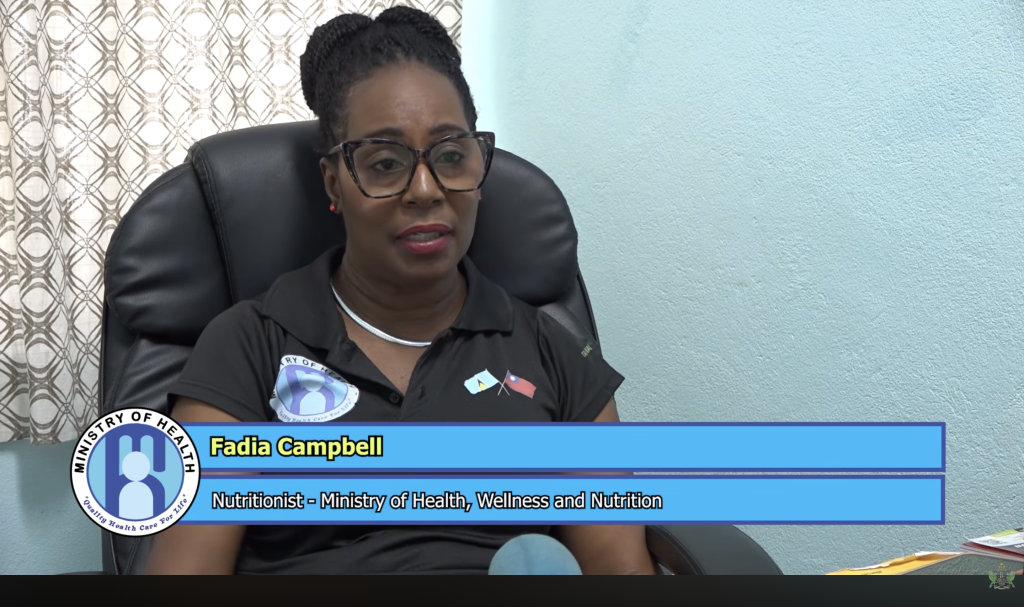
Speaking with the media earlier this week, Nutritionist Fadia Campbell said the initiative was designed to move beyond theory and equip participants with practical skills they can apply in their daily lives.
“So the goal of this initiative today is to sort of educate the participants in giving them the practical skills that when they go home, they’re able to prepare their foods using local herbs and seasonings and to limit or restrict as much as possible added salt or sodium to their diets,” Campbell explained.
She further highlighted the importance of portion control as part of effective dietary management for chronic disease prevention.
“Also, portion control is another aspect of this activity today, where they will be able to visualize the amount of food that they can put on their plates using the various food groups or various meals that they cook,” she said.
The demonstration featured the preparation of low-sodium and no-added-salt meals using ingredients drawn from the six food groups, reinforcing the importance of balanced nutrition in everyday cooking.
Community Health Nurse at the Laborie Wellness Centre, Kerthleen Charles, provided insight into the patient population being served, noting the scale of chronic disease cases within the community.
“We have a total number of 140 clients diagnosed with diabetes, 47 of which are male, 93 female,” Charles said.
She further broke down the age distribution among patients, highlighting the predominance of older adults within the cohort.
“So we have clients out of that figure, clients above 50, we had a total of 121 and below 50 we have 19,” she explained.
Charles also provided additional figures specifically relating to diabetes cases within the clinic’s catchment area.
“Okay, let me tell you for diabetes, remember our focus is hypertension, but just to let you know, diabetes we have a total of 61 clients, 15 of which are male, 46 female,” she said.
She added that the majority of diabetic patients fall within the older age bracket.
“Above 50 we have 56, below 50 we have 5,” Charles stated.
Health officials continue to stress that lifestyle modification, particularly through improved diet and reduced salt consumption, remains a key strategy in addressing the growing burden of non-communicable diseases across Saint Lucia. The Ministry of Health has indicated that such community-based interventions will remain central to its public health approach, as it seeks to reduce long-term complications associated with hypertension and diabetes.