

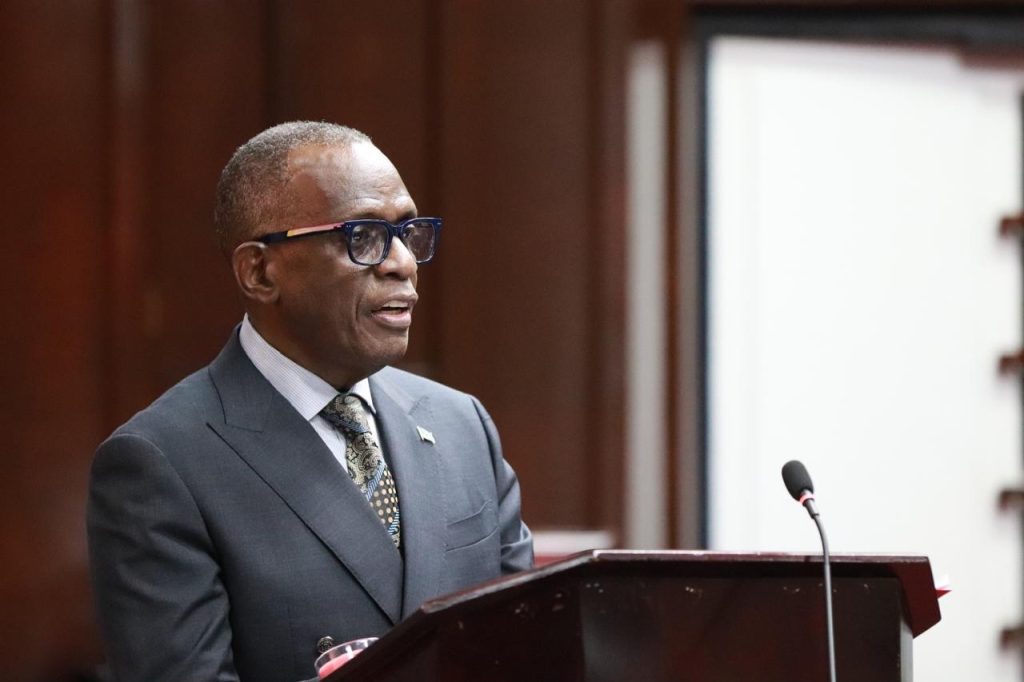
Prime Minister Philip J Pierre says Saint Lucia must adopt a more compassionate and strategic approach to addressing the emotional and psychological effects of violent crime, warning that trauma within communities cannot be ignored.
Speaking during Monday’s pre-Cabinet press conference on Tuesday, May 26, the Prime Minister outlined a series of government interventions aimed at addressing the root causes of crime, while also calling for greater public dialogue around trauma, mental health, and social support.
“First of all, you have to go to the root of the problem,” Pierre stated.
He explained that the government has expanded support services within the education sector, including plans to recruit additional counsellors and social workers.
“The Ministry of Education, we have budgeted for them to get at least 12 new counsellors, social workers,” he said.
Pierre also noted that the government has restarted the truancy unit to encourage children to return to school and is continuing to expand technical and vocational education and training programmes.
“We are expanding on TVET education to make children go to school to learn,” he explained.
The Prime Minister acknowledged, however, that such interventions will not produce immediate results.
“It’s a whole, it’s a series of interventions, but these interventions, they take time,” he said.
Pierre also spoke candidly about the psychological impact recent violent incidents have had on members of the public, particularly women and young people.
“In terms of trauma, I feel it,” he said. “I know there are young ladies who are petrified because of what happened, petrified.”
According to Pierre, national conversations surrounding violence and crime must be conducted in a more measured and humane manner.
“That’s why it’s important for us to talk about these things,” he said. “Talk about it in a, not the way it’s been talked about by some people. Let’s talk about it in a more holistic fashion. Let’s talk about it in a more soothing way.”
The Prime Minister suggested that support groups and shared dialogue could help individuals process grief and trauma.
“Let’s have groups of people who have been affected,” Pierre proposed. “I think communication is one of the easiest ways where we can share experiences.”
He also warned against allowing public anger to intensify social tensions.
“We haven’t got to generate too much anger because that doesn’t help,” he said. “Because there’s enough natural individuals. Now it’s not the entire society, you know, it’s one man who did that.”
Pierre further described perpetrators of violent acts as “victims of circumstances” and pointed to the long-term psychological effects of military service as an issue that deserves closer attention within Saint Lucia and the wider Caribbean.
“There are hundreds of Saint Lucians who go in the US army, who are in the British army, who are going to be fighting wars, who are going to be deployed,” he stated.
The Prime Minister referenced post-traumatic stress disorder among returning soldiers, arguing that the issue has not received sufficient public discussion.
“There are hundreds of Saint Lucians who have fought war, and you know about post-traumatic experiences,” he said. “So it’s been very complex.”
Pierre added that some individuals who encounter legal trouble overseas are eventually deported back to Saint Lucia after military service abroad.
“When you commit a crime, they send you back home,” he remarked. “The same countries that trained you. When you misbehave, they send you back home.”
“So, you see how complicated it is?” Pierre added.
The Prime Minister maintained that addressing violent crime requires a broader understanding of the social, emotional, and international factors influencing behaviour, while continuing efforts to strengthen education, counselling, and community support systems.