Saint Lucia’s water systems remain under pressure as officials warn that below normal rainfall, rising temperatures and ongoing infrastructure challenges continue to threaten supply levels across the island, despite some improvement in dam capacity ahead of the 2026 Atlantic hurricane season.
The warning came during a monthly briefing on Tuesday, May 5, involving the Water and Sewerage Company Inc. and key agencies responsible for water management and meteorological monitoring.
Director of the Saint Lucia Meteorological Services, Vigil Saltibus, cautioned that the island could continue experiencing below average rainfall conditions due to the possible development of a significant El Niño event later this year.
“Continued likelihood for below normal rainfall into the early part of the wet season due in part to a developing El Niño, which is currently forecasted to be moderate to a strong intensity,” Saltibus explained.
She warned that higher temperatures could further increase pressure on already strained water resources.
“We can also expect warmer temperatures, which can and will increase water demand and place additional strain on resources,” she said. “These conditions raise additional concerns such as increased risk of bushfires.”
Saltibus also addressed forecasts for the upcoming Atlantic hurricane season, noting that while some agencies are predicting fewer storms than average, residents should not become complacent.
“Some forecast agencies are indicating fewer storms, hurricanes, and major hurricanes compared to the long-term average and a reduced likelihood of major hurricane landfalls in the Caribbean region,” he stated. “However, it is important to emphasize that these are seasonal averages, not guarantees. Even in quieter seasons, storms can still form, intensify rapidly, and track towards land.”
Meanwhile, Director of the Water Resources Management Agency, Jason Ernest, said current dam levels are considerably better than during the 2024 water-related emergency, though authorities remain cautious.
“As of April 23rd, 2026, when compared to April 23rd, 2024, the last year of a water-related emergency, we realized that there was an 8 feet difference in terms of water level at the JCD,” Ernest said.
“And as of April 30th, that was last week Thursday, the difference was 10 feet. So definitely, like I indicated earlier, the season turned out to be much better than expected when we look at the water levels at the JCD.”
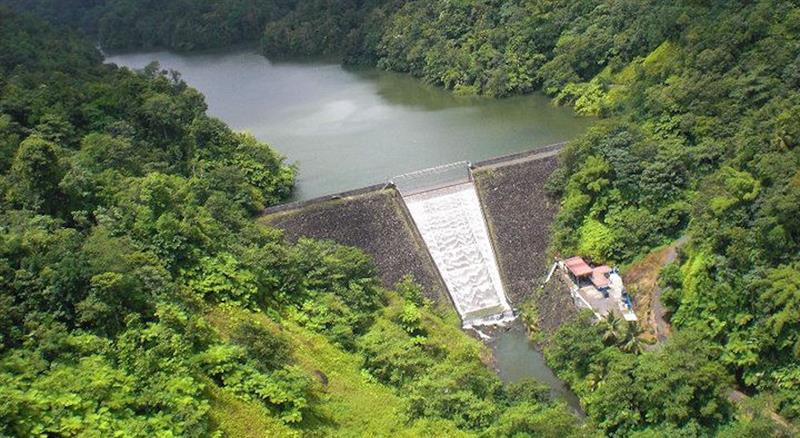
He described the John Compton Dam as a critical indicator for national water security because of the large population it serves.
“This is what we use as an institution, almost like a bellwether to determine where exactly we are because the JCD serves the larger population on the island,” Ernest explained. “So, the water level has more or less hovered near or at the spillway level.”
Despite these improvements, WASCO officials say several communities continue to experience supply difficulties.
Production, Treatment and Quality Manager Khalidd Vidal noted that production levels remain inconsistent even after upgrades to parts of the system.
“Despite upgrades to some of our intakes, we are still noticing some drops in production across our network,” Vidal said. “So, we are calling for the public to increase storage, whether it’s a drum, whether it’s a tank, a bucket, whatever it is.”
“When you get some water into your system, we are asking that you do your best to conserve and of course manage your supply of water,” he added.
Vidal maintained that officials remain optimistic as the rainy and hurricane seasons approach. “The situation is hopeful. We are hopeful that it will get better as we enter the hurricane season,” he stated.
Head of Projects Maurice Norville said supply management measures implemented in recent weeks have helped stabilize service in some areas.
“We have noted, based on feedback from our customers, that there has been a great deal of success over the past few weeks as a result of this supply management schedule,” Norville explained.
However, he acknowledged that conditions in the south of the island remain particularly challenging.
“When we look at the southern region, as Mr. Vidal would have indicated, the water supply situation is a bit more, let’s say, dire than the north due to even lower levels of rainfall and the demand from our customers in those areas,” he said.
Norville added that WASCO has introduced additional emergency measures in the affected communities.
“So, what we have done is that we’ve implemented a valving regime and also water trucking to communities which are the greatest affected ones within the southern region,” he explained.