

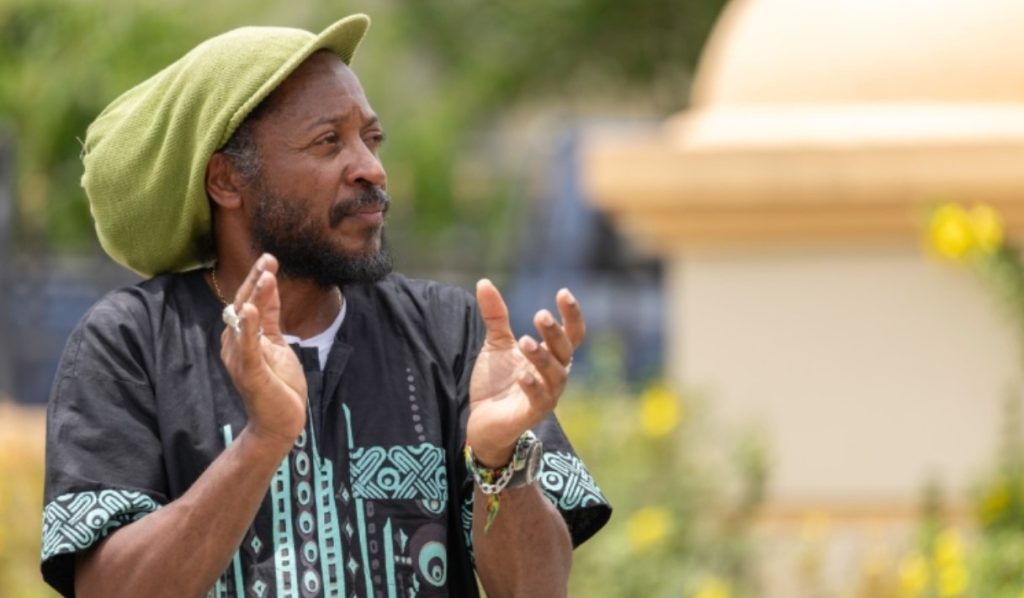
A renewed campaign to strengthen cultural awareness and historical consciousness in Saint Lucia is gaining momentum as the Iyanola Council for the Advancement of Rastafari and Pan African People (ICAR) continues its push for African heritage studies to be formally integrated into the national school curriculum.
ICAR says the initiative forms part of a decades-long effort to preserve African history, identity and cultural pride among Caribbean people.
President of ICAR, Aaron Alexander, in an interview this week, described the move towards introducing African heritage studies into schools as an important development.
“It’s a journey that ICAR has been on,” Alexander said. “As we all know, the Rastafari community have been at the vanguard of ensuring that we keep up the consciousness, we keep on the African history ensuring that it’s not buried and for the past 50 years we’ve been doing that.”
He added that government involvement in the initiative represented meaningful progress.
“Now with the government coming on board and making it more mainstream and trying to introduce it into our school syllabus is, I think, a step in the right direction,” he stated.
Alexander also linked the discussion to wider developments taking place across the African continent, pointing to current political movements advocating for greater control over African resources.
“Presidents like Ibrahim Traoré is taking a stand for the whole of the African continent and saying, ‘Hey, let us use our resources for the benefit of our people, resource sovereignty,’” he said.
“Now, who would be against that other than the former colonial masters who are still trying to overthrow him, still causing coups and the alliance of the Sahel region with Mali, Burkina Faso and Niger?”
Referencing recent instability in parts of West Africa, Alexander argued that these developments highlight the importance of understanding African history and geopolitics within Caribbean societies.
He also stressed the need for schools to teach more extensively about African resistance and independence movements, particularly the role of Ethiopia during the colonial era.
“In 1935, we saw Italy under Mussolini, Benito Mussolini invaded Ethiopia again and he was defeated on May the 5th 1941 where Haile Selassie returned to sit on the throne as King of Kings of Ethiopia and so on,” Alexander said.
“So, this kind of history need to be taught in our school system. These things need to come to the fore, give us a sense of pride in ourselves because oftentimes we’re looked upon as if well we can achieve nothing as black people and that’s a great feat that was achieved.”
Alexander further noted that Ethiopia held a unique place in African history during the colonial period. “Ethiopia was the only country not colonized coming from the Berlin Conference of 1884,” he stated.
ICAR officials say the organization intends to continue consultations and advocacy efforts aimed at ensuring African heritage education becomes a permanent and meaningful component of Saint Lucia’s education system.